
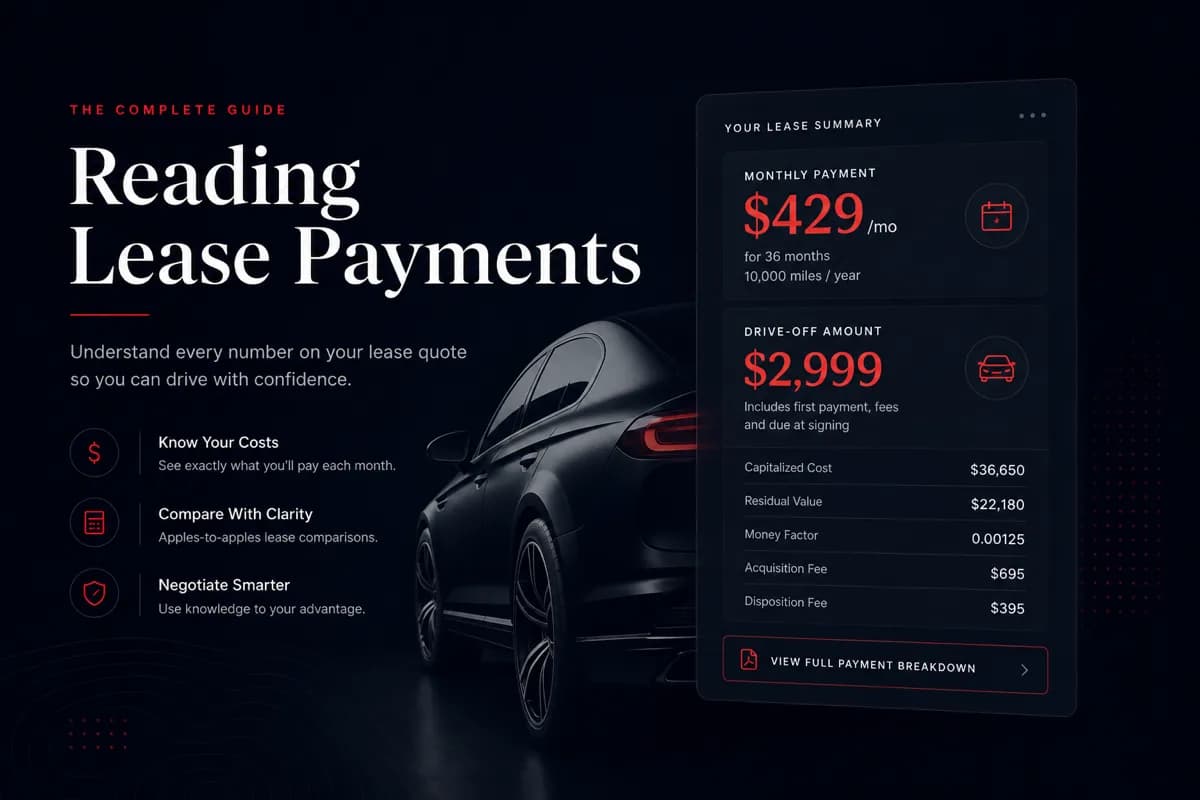
What's due at signing on a car lease? Reading payments and drive-off
How to interpret payment, drive-off, term, and mileage when comparing lease listings online or from multiple brokers.
By LeaseGuru.aiUpdated 5 min read
Lease ads lead with monthly payment—but that single number hides drive-off cash, mileage assumptions, and fees that change what you actually pay.
Two offers with the same payment can cost very different amounts over the lease term. Learning to read payment, drive-off, term, and mileage together is the fastest way to compare listings apples-to-apples.
LeaseGuru lines up these fields from multiple partner listings so you can filter in one place. This guide explains what each field means before you contact a source.
TLDR Quick Guide
How to read lease payment listings:
- Monthly payment alone does not determine total cost—always check drive-off.
- Drive-off bundles first payment, fees, taxes, registration, and any cap reduction.
- Term length and annual mileage both affect payment and end-of-lease exposure.
- Compare total cash outlay: (payment × months) + drive-off + known fees.
- Request a full itemized quote if a listing only shows payment.
Monthly payment is not the whole story
A low monthly payment with a large upfront payment is not automatically cheaper than a slightly higher monthly with less cash at signing. Compare total cash outlay over the life of the lease when judging value.
Total cost math
Multiply monthly payment by term months, then add drive-off and any fees you pay upfront. That rough total helps you compare offers with different payment structures.
Using LeaseGuru filters
LeaseGuru lines up key fields from different sources so you can filter by maximum payment and drive-off in one grid. Add brand or term filters to narrow your shortlist quickly.
Drive-off (due at signing)
Drive-off often bundles first month’s payment, acquisition or bank fee, capitalized cost reduction (down payment), taxes, registration, and dealer fees.
What “$0 down” really means
Listings may show “$0 down” but still require taxes, registration, or first payment—read the fine print on each offer. Zero cap reduction is not the same as zero due at signing.
When drive-off is missing
If a listing only shows monthly payment, request a full quote that itemizes signing amounts before committing. Never sign based on payment alone.
Term and mileage
Term length and mileage allowance interact with residual value to set your payment. Misaligned assumptions are a common source of post-signing regret.
Term length
Common terms are 24, 36, and 39 months. A longer term can lower payment but may increase total rent charges or maintenance exposure as the vehicle ages.
Mileage allowance
Allowances like 10k, 12k, or 15k miles per year affect payment and excess-mile fees. Match the allowance to your actual annual driving to avoid surprises at return.
Using LeaseGuru filters effectively
Start with your budget cap on monthly payment and optional caps on drive-off and term. Add brand preferences if you want picks weighted toward certain makes.
Open any deal’s detail page to compare similar vehicles or jump to the broker source for the latest contract details.
See what is leasing well right now
Live listings ranked by LeaseGuru deal score, with payment, due at signing, and term on each card.
- View deal details
 DemoScore100
2021 Porsche Taycan CPO Turbo S
- Monthly:
- $1,079/mo
- Due at signing:
- $5,499
- Term:
- 24 mo
California
- View deal details
 DemoScore96
2025 Audi A5 Premium
- Monthly:
- $239/mo
- Due at signing:
- $3,999
- Term:
- 24 mo
California
- View deal details
 DemoScore94
2026 Mercedes-Benz GLE SUV 4Matic 350
- Monthly:
- $379/mo
- Due at signing:
- $3,499
- Term:
- 24 mo
South
Key Takeaways
- Always compare total cost—payment times months plus drive-off—not payment alone.
- Drive-off includes fees, taxes, and first payment even when ads say “$0 down.”
- Align term and mileage to your driving habits before you sign.
- Use LeaseGuru filters to shortlist, then verify itemized quotes with the source.
- Missing drive-off on a listing is a signal to ask for a full breakdown.
Ready to see real lease offers?
Share your ZIP and we'll match you with current deals. Free, no obligation.
FAQs
Due at signing, also called drive-off, is the cash you pay on pickup day: the first monthly payment, acquisition fee, registration and title, any upfront sales tax, dealer documentation fees, any cap cost reduction, and on some brands a refundable security deposit. A “$0 down” ad usually removes only the cap cost reduction.
Pay only the required items: first payment, fees, and any taxes your state collects upfront. Extra cap cost reduction cuts the monthly payment but is generally not refunded if the car is totaled or stolen early, even with GAP coverage, which covers the lender's loss rather than your down payment. Keep upfront cash low and compare offers on total cost (payment × months + drive-off).
There is no universal “good” number—it depends on vehicle MSRP, term, mileage, incentives, and your credit tier. Compare payment relative to MSRP and total drive-off for the same structure.
Drive-off includes taxes, registration, acquisition fees, and often the first month’s payment. Some markets tax the full lease upfront, which spikes signing amounts.
Cap cost reduction lowers payment but does not build equity. If the car is totaled early, you may not recover upfront cash. Weigh lower payment against liquidity and gap coverage.
Longer terms spread depreciation but increase total rent charges and wear exposure. A 39-month lease on a 36-month program can sometimes be a marketing stretch—confirm the program details.
Related guides
 5 min
5 minCar leasing 101: how leasing works and what to expect
A plain-English overview of auto leasing: structure, trade-offs versus buying, and what to expect when your term ends.
 3 min
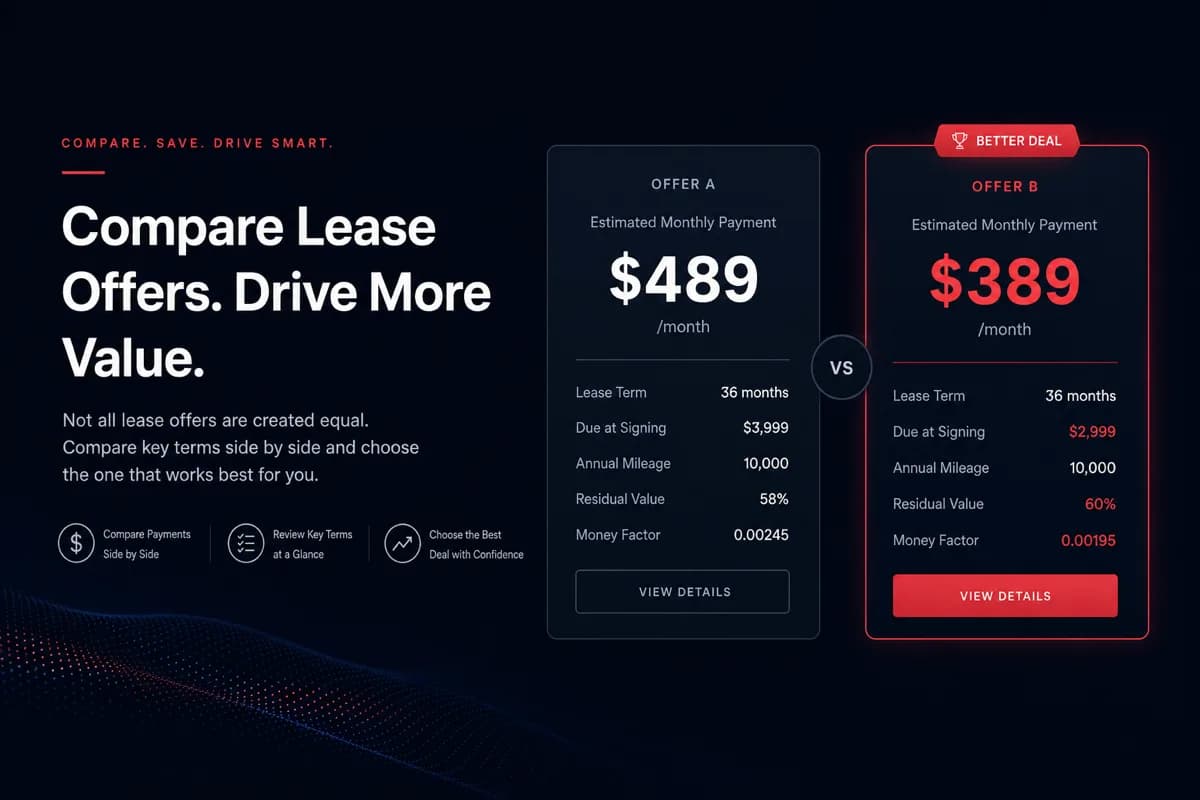
3 minComparing lease offers across brokers and dealers
How to compare specials from different companies side by side when every site formats payment data differently.
 4 min
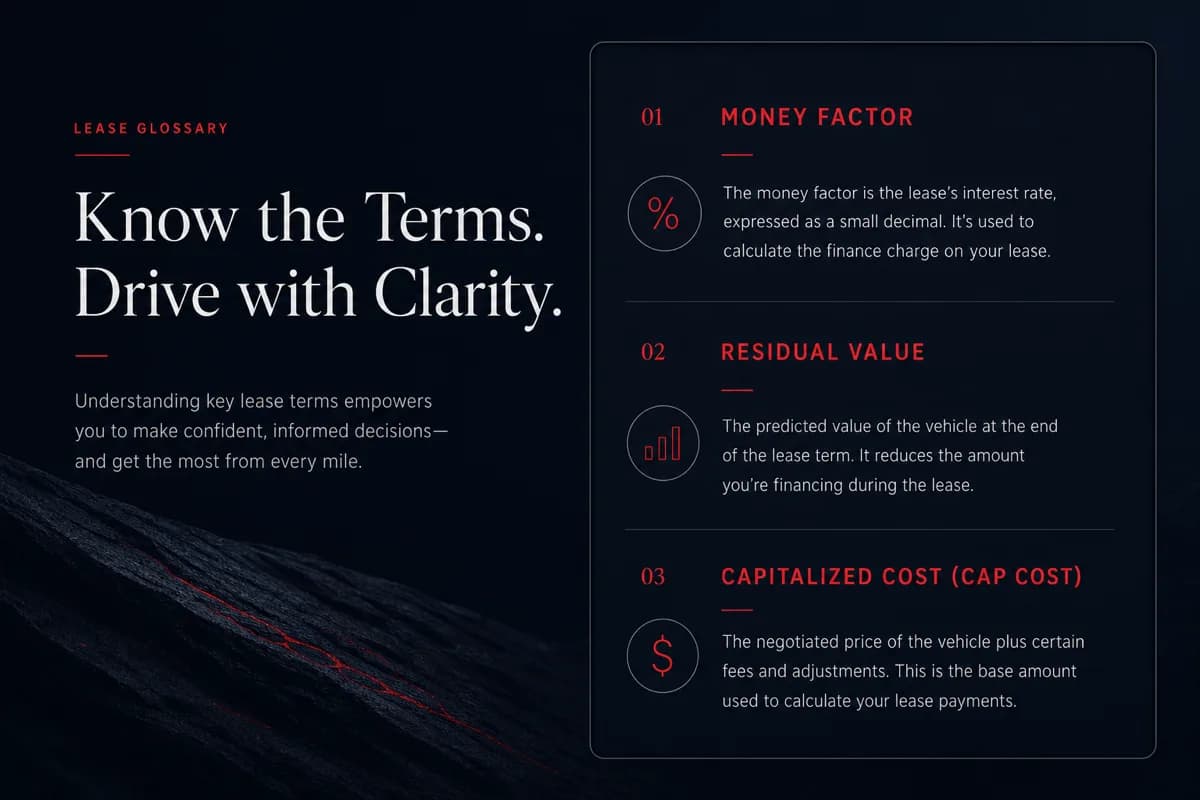
4 minCar lease glossary: key terms explained
Quick definitions of terms you will see in lease ads, quotes, and contracts—written for shoppers, not accountants.
Ready to compare?
Compare live listings by payment, drive-off, and term, then request help on a deal when you are ready.