
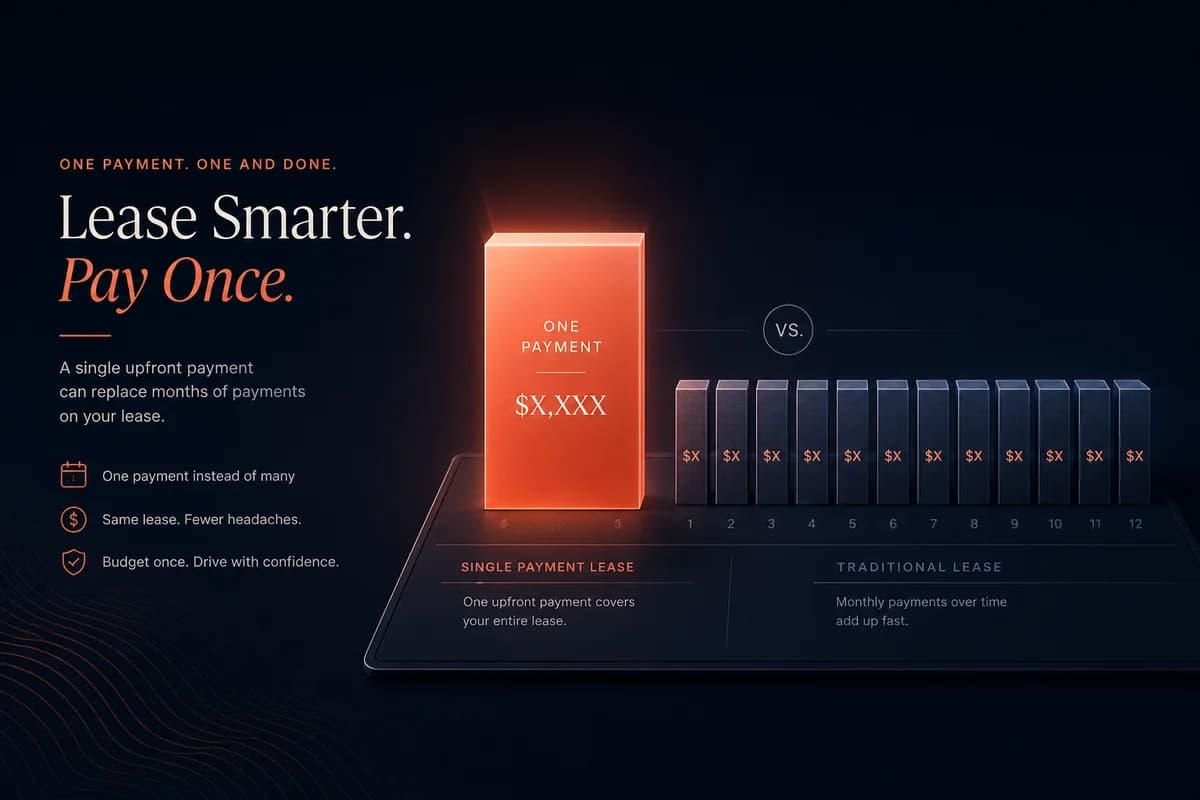
One-pay (single-payment) leases
What single-payment leases are, when they beat monthly billing, and how to compare one-pay quotes to traditional lease structures.
By LeaseGuru.aiUpdated 4 min read
A one-pay lease—also called a single-payment lease—bundles most or all of your lease charges into one upfront sum instead of monthly billing. Captive lenders often reduce money factor on one-pay structures, which can save finance charge versus paying month by month.
One-pay is not the same as buying the car. You still return the vehicle at lease end unless you exercise a purchase option. You are prepaying lease rent and depreciation, not building unrestricted ownership equity.
This guide explains how one-pay works, cash-flow trade-offs, insurance gaps, and how to compare a single-payment quote to a conventional lease on LeaseGuru.
TLDR Quick Guide
- One-pay = most lease cost paid upfront in a single lump sum; often lower MF than monthly billing.
- You still have mileage limits, wear rules, and a return or buyout decision at term end.
- Total cash outlay is high on day one—compare opportunity cost of tying up capital.
- Gap insurance and early total loss scenarios need extra attention with large upfront payments.
- Compare one-pay total to (monthly payment × months) + drive-off on a standard lease.
What is a one-pay lease?
Instead of 36 monthly payments, the lessor calculates a single amount due at signing that covers depreciation and finance charge for the full term—plus taxes and fees as required. You may still pay registration or minor lines separately depending on state and dealer.
How it differs from a big cap reduction
Large cap cost reduction lowers the amount leased but you still pay monthly rent charge on the balance. One-pay is a distinct program with its own money factor tier and payment math—not just putting more money down on a standard lease.
Who offers one-pay
Most captives support single-payment leases on retail programs. Brokers sometimes quote one-pay alongside monthly options on the same vehicle. Ask explicitly if you want both structures for comparison.
Money factor reduction benefits
Lenders reward prepayment with a lower money factor because they receive finance charge upfront and carry less collection risk. Savings vary by brand and tier—run both worksheets to see dollar difference over the term.
Measuring savings
Compare total of all monthly payments plus drive-off on a standard lease against the one-pay lump sum plus any remaining fees. Use the same cap cost, residual, term, and mileage on both quotes.
Cash flow and opportunity cost
Tying up $15,000–$30,000 on day one improves monthly budgeting but removes liquidity. If you would otherwise earn return on that cash—or need it for emergencies—monthly leasing may fit better even at slightly higher total finance charge.
Business and accounting context
Some business lessees prefer one-pay for simplified expense treatment. Consumer shoppers should still compare total out-of-pocket and early-exit risk, not just monthly simplicity.
Insurance, gap, and early exit
If the vehicle is totaled early, insurance pays market value—not your prepaid lease balance. Gap coverage matters more when you have large upfront exposure. Early termination on a one-pay lease can forfeit much of the prepaid amount—read pull-ahead and default terms carefully.
Gap insurance and lease coverage
When one-pay beats monthly
- You have cash available and want the lowest total finance charge on a known-term lease
- You prefer no monthly auto draft for three years
- Captive MF discount on one-pay is substantial on your target model
- You are confident mileage and early exit risk are low
Reading broker one-pay lines
One-pay amounts appear as a single drive-off or “payment” line on some broker sheets. Confirm taxes are included and that the quote matches a captive one-pay program—not an informal prepayment estimate.
See what is leasing well right now
Live listings ranked by LeaseGuru deal score, with payment, due at signing, and term on each card.
- View deal details
 DemoScore100
2021 Porsche Taycan CPO Turbo S
- Monthly:
- $1,079/mo
- Due at signing:
- $5,499
- Term:
- 24 mo
California
- View deal details
 DemoScore96
2025 Audi A5 Premium
- Monthly:
- $239/mo
- Due at signing:
- $3,999
- Term:
- 24 mo
California
- View deal details
 DemoScore94
2026 Mercedes-Benz GLE SUV 4Matic 350
- Monthly:
- $379/mo
- Due at signing:
- $3,499
- Term:
- 24 mo
South
Key Takeaways
- One-pay leases prepay lease cost upfront—often with a reduced money factor.
- You still face mileage, wear, and return-or-buyout rules at term end.
- Compare total one-pay cost to monthly lease total with identical structure.
- Carry gap insurance and understand early termination loss of prepaid amounts.
- Request both one-pay and monthly worksheets before choosing.
Ready to see real lease offers?
Share your ZIP and we'll match you with current deals. Free, no obligation.
FAQs
No. You are prepaying a lease contract—you do not own the vehicle unless you exercise a purchase option at lease end. Registration and title stay with the lessor during the term.
Some shoppers use a low-rate personal loan or line of credit to fund one-pay, then compare blended cost to monthly lease MF. Run the math carefully—loan plus one-pay can beat monthly lease or not, depending on rates.
Early termination typically does not refund unused prepaid rent charge. Pull-ahead programs when leasing again may credit some amounts—program-specific.
It simplifies the headline number for cash-rich clients and can beat monthly total cost. Always verify it is an official captive one-pay program with disclosed MF and residual.
Related guides
 5 min
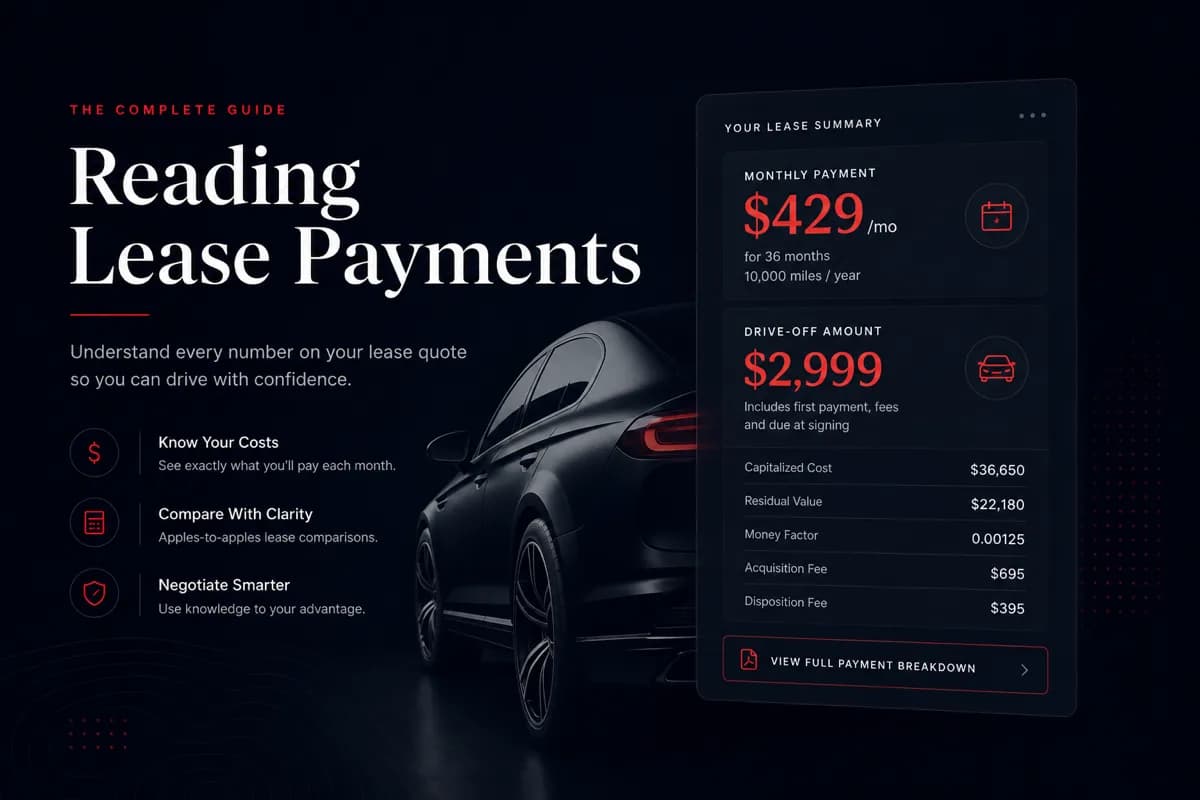
5 minWhat's due at signing on a car lease? Reading payments and drive-off
How to interpret payment, drive-off, term, and mileage when comparing lease listings online or from multiple brokers.
 5 min
5 minMoney factor and APR explained
What money factor means on a lease, how to translate it to an APR-style number, and why finance charge matters when you compare listings.
 4 min
4 minZero-down lease deals: what $0 down really means
Why “$0 down” and “no money down” lease deals still cost money at signing, and how to read drive-off when comparing zero-down specials.
Ready to compare?
Compare live listings by payment, drive-off, and term, then request help on a deal when you are ready.