
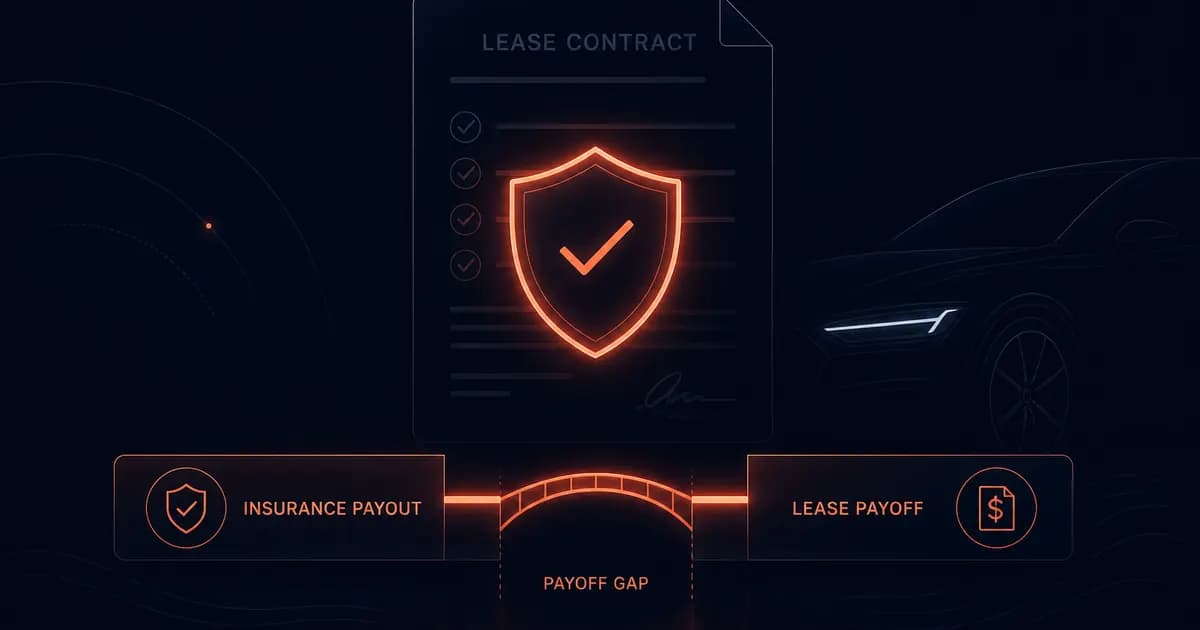
Do you need gap insurance on a lease?
Whether your lease already includes a gap waiver, how to verify it in the contract — not on your insurance card — and when buying coverage is still worth it.
By LeaseGuru.aiUpdated 12 min read
The question is not “what is gap.” It is whether you already have it, whether anyone requires you to buy it, and how you would know in two minutes.
A lease gap waiver is a contract clause, not a policy. It will not appear on your auto-insurance documents. Checking the insurance card for the word “gap” and finding nothing tells you almost nothing.
This page answers the phrasings people actually search: do you need it, is it required, should you get it, and how do you know if you have it. The table below is only what captives publish on their own sites (August 2026, with Mercedes-Benz and Tesla added October 2026).
TLDR Quick Guide
Check the lease, then decide:
- Open the signed lease, not the insurance policy. Look for gap waiver, waiver of deficiency, or a separately priced GAP line at signing.
- Honda.com lists GAP as a One-Pay highlight. It does not say monthly Leadership Leasing includes a waiver.
- Toyota Financial Services sells optional GAP — and says you cannot buy it if the lease already has a deficiency-balance waiver.
- GM Financial calls GAP optional and not required to obtain financing.
- Mercedes-Benz and Tesla say their leases include gap protection. Most other captives do not publish the answer. That is not a yes. Read the contract or call the lender on your statement.
- If there is no waiver, your own insurer’s lease/loan payoff rider is usually cheaper than dealer F&I GAP.
Do you need it?
You need a way to cover the shortfall if the car is totaled or stolen and insurance pays actual cash value, which is often less than the lease payoff. You do not automatically need to buy a product. Many leases already waive that shortfall in the contract. Buying a second layer on top of a waiver is usually wasted money.
- Already have a waiver in the lease → do not buy dealer or insurer GAP unless the waiver excludes your situation (missed payments, prior damage).
- No waiver → buy coverage, preferably from your auto insurer, before you drive off.
- Zero-down, one-pay, or rolled-in negative equity → the shortfall is larger early in the term. Confirm the waiver exists before you skip coverage.
Is gap required on a lease?
Lessors require comprehensive and collision, with the lessor named as loss payee. GM Financial publishes the limits it wants for lease customers: $100,000/$300,000 bodily injury, property damage with “$50,000/$500,000 limits or combined single limits,” and a maximum $1,000 deductible on collision, fire, theft and comprehensive. That is insurance. It is not GAP.
GM Financial also says GAP is optional and not required to obtain financing. Toyota Financial Services says the same about its optional GAP product. So “required” usually means the lessor wants the payoff protected — and often satisfies that itself with a waiver — not that you must buy a $800 F&I box.
If a dealer says gap is required, ask whether they mean a contract waiver (already in the lease) or a separately priced product. Those are different things.
Car lease insurance requirements by brand: liability limits, deductible caps, and who to name on the policy, per captive
How do I know if I have it?
- Open the signed lease agreement, not the insurance declarations page.
- Search for gap waiver, GAP, waiver of deficiency, or excess wear and loss waiver.
- Check the itemized charges at signing. A priced GAP or Guaranteed Asset Protection line means it was sold, not included.
- If the contract is ambiguous, call the captive on your monthly statement and ask whether this account carries a gap waiver.
- Ask what the waiver excludes. Late amounts and prior damage are commonly outside it.
What each captive publishes
This is the list the old version of this page refused to print. It is short on purpose. A brand gets a row only when the captive or OEM states, on its own domain, whether gap is included, sold, or already covered by a waiver.
| Brands | Captive lender | What the captive publishes | Published on |
|---|---|---|---|
| Honda, Acura | Honda Financial Services | Honda.com lists Guaranteed Asset Protection (GAP) coverage as a One-Pay Lease highlight. The same leasing page does not state a built-in waiver on monthly Leadership Leasing contracts. | automobiles.honda.com |
| Toyota, Lexus | Toyota Financial Services / Lexus Financial Services | TFS sells optional Guaranteed Auto Protection at the dealer. TFS's own GAP brochure says GAP is not available for lease customers who already have a deficiency-balance waiver — so some TFS leases already carry a waiver and some do not. | toyotafinancial.com |
| Chevrolet, GMC, Buick, Cadillac | GM Financial | GM Financial describes GAP as an optional ancillary product, not required to obtain financing. It does not publish a standard built-in lease gap waiver. | gmfinancial.com |
| Mercedes-Benz | Mercedes-Benz Financial Services | MBFS's leasing page: if the vehicle is declared a total loss, “we'll waive the difference between the insurance proceeds and the balance owed to Mercedes-Benz Financial Services, less any deductible.” | mbusa.com |
| Tesla | Tesla Finance | Tesla's leasing support page, under its insurance requirements: “Your lease comes with gap protection.” | tesla.com |
Brands that do not publish an answer
The rest of the major captives do not put a yes or no on a public page. Secondary sites will happily invent one. We will not.
| Brands | Captive lender | What the captive publishes | Published on |
|---|---|---|---|
| Nissan, Infiniti | Nissan Motor Acceptance (NMAC) | Not published online | — |
| Hyundai, Kia, Genesis | Hyundai Capital America | Not published online | — |
| Subaru | Subaru Motors Finance (Chase) | Not published online | — |
| Mazda | Mazda Financial Services | Not published online | — |
| Volkswagen, Audi | Volkswagen Credit / Audi Financial Services | Not published online | — |
| Ford, Lincoln | Ford Credit | Not published online | — |
| Jeep, Ram, Dodge, Chrysler | Stellantis Financial / Chrysler Capital | Not published online | — |
| BMW | BMW Financial Services | Not published online | — |
| Volvo | Volvo Car Financial Services | Not published online | — |
For these, the two-minute contract check above is the whole method. The lender named on your statement can confirm it in one call.
Does your state add extra protections?
Most states have no GAP-specific statute — general contract and insurance law applies, and the two-minute contract check above is your whole method. A growing number of states have passed their own GAP waiver laws since 2017, mostly governing refunds, fee caps, and disclosure rather than whether you need coverage at all. This is not legal advice — verify current requirements with your state's insurance or financial-protection regulator before relying on it.
| State | Law | In effect | Headline requirement |
|---|---|---|---|
| California | AB 2311 | Jan 1, 2023 | GAP waiver fee capped at 4% of the amount financed; buyer can cancel anytime without penalty; separate signed disclosure required; GAP can't be a condition of credit. |
| New York | Insurance Law §3427 | Ongoing | GAP must be sold as licensed insurance through a DFS-authorized insurer with a DFS-approved policy form; can't be a condition of the loan. |
| Texas | SB 1052 | Sep 1, 2017 | Refund of the unearned waiver charge within 60 days of the finance agreement ending. |
| Florida | SB 902 (Vehicle Value Protection Agreements Act) | Oct 1, 2024 | New licensing and disclosure framework specifically for GAP and similar value-protection products. |
| New Jersey | N.J.S.A. §17:16BB-6 | Ongoing | Automatic pro-rata refund within 60 days of early loan payoff — no request required. |
| Connecticut | SB 1033 §7 | Jan 1, 2024 | New disclosure and cancellation-rights requirements for waiver contracts signed on or after this date. |
| Missouri | SB 398 | Feb 23, 2024 | New state framework for motor-vehicle financial-protection products, including GAP waivers. |
| Maine | S.P. 531 | Jan 1, 2018 | 30-day free-look period with full refund; unearned-portion refund on written request within 90 days of early termination. |
| Minnesota | Minn. Stat. §59D.07 | Ongoing | Refund of the unearned waiver charge on cancellation or early termination, after any free-look period. |
| Colorado | UCCC Administrator guidance | Ongoing | Interpretive clarity on refund notices and cancellation fees under the state's Uniform Consumer Credit Code. |
If your state isn't listed, that's not a gap in consumer protection — it means no state-specific GAP statute turned up in our research as of August 2026, not that no protections exist. Standard consumer-finance and insurance law still applies. Check your state department of insurance or attorney general's consumer-protection page, and always read the actual waiver language in your contract.
Dealer GAP vs. your insurer's rider — real numbers
The two ways to buy GAP price out very differently, and they don't cover exactly the same thing.
| Source | Typical price | How you pay | What it covers |
|---|---|---|---|
| Your auto insurer (add-on) | $2–$20/mo (avg. ~$7/mo), or $20–$40/yr | Monthly, folded into your regular premium. Cancel anytime you stop leasing. | Full gap between the payout and what you owe, in most states. |
| Your auto insurer (loan/lease payoff rider) | $3–$15/mo | Monthly, as a policy rider. | Capped — typically up to 25% of the vehicle's value, not the full shortfall. |
| Dealer F&I GAP | $400–$1,000 one-time (often quoted $500–$700) | Usually rolled into the cap cost or loan, so you finance it with interest for the whole term. | Full gap, per that specific waiver's terms — read it, not the salesperson's summary. |
Rolling a $700 dealer GAP charge into a 60-month loan at 6% APR pushes the real cost to roughly $812 once interest is included — call it 5 to 10 times what the same protection costs as a monthly insurer add-on. The dealer version isn't always the wrong choice (some people want it bundled and done at signing), but price it against your own insurer's quote before you sign the F&I paperwork.
Should I get it from the dealer or my insurer?
Only after you know the lease does not already waive the shortfall. Dealer F&I GAP is a one-time premium, often financed into cap cost so you pay rent on it. Many auto insurers add lease/loan payoff coverage as a monthly rider, usually cheaper, and cancellable when you no longer lease.
- Does my insurer already include payoff coverage on leases?
- Is the dealer product a one-time premium or monthly, and can I cancel it?
- What is excluded — theft without a police report, DUI, overdue payments?
- Does it cover the deductible? Usually no. Gap is the payoff shortfall after ACV, not the collision deductible.
What gap does not cover
- Normal lease-end return: mileage, wear, disposition. Those are separate.
- Your collision deductible, unless the product says it does (TFS optional GAP may cover up to $1,000 of deductible in most states).
- A buyout. Once you own the car, lease gap ends.
See what is leasing well right now
Live listings ranked by LeaseGuru deal score, with payment, due at signing, and term on each card.
- View deal details
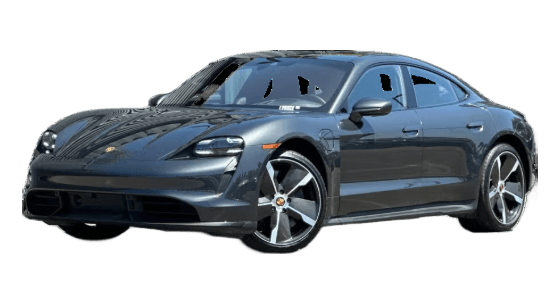 DemoScore100
2021 Porsche Taycan CPO Turbo S
- Monthly:
- $1,079/mo
- Due at signing:
- $5,499
- Term:
- 24 mo
California
- View deal details
 DemoScore96
2025 Audi A5 Premium
- Monthly:
- $239/mo
- Due at signing:
- $3,999
- Term:
- 24 mo
California
- View deal details
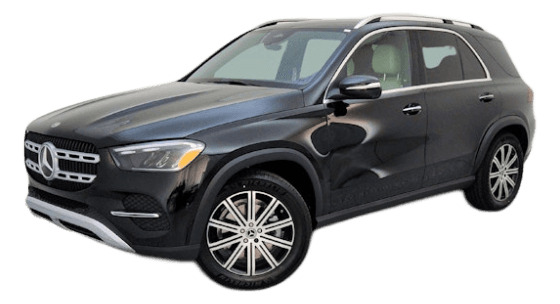 DemoScore94
2026 Mercedes-Benz GLE SUV 4Matic 350
- Monthly:
- $379/mo
- Due at signing:
- $3,499
- Term:
- 24 mo
South
Key Takeaways
- Need a payoff backstop on a total loss — not automatically a product you buy.
- Honda publishes GAP on One-Pay; Toyota sells optional GAP and withholds it when a waiver already exists; GM calls GAP optional.
- Mercedes-Benz waives the shortfall less your deductible; Tesla says its leases come with gap protection. Everyone else: unpublished. The contract is the source.
- Required insurance is comprehensive and collision with the lessor as loss payee. That is not GAP.
- If you must buy it, price the insurer rider against F&I before signing.
Ready to see real lease offers?
Share your ZIP and we'll match you with current deals. Free, no obligation.
FAQs
You need the shortfall covered if the car is totaled. You do not automatically need to buy a policy. Check the lease for a gap waiver first. If the waiver is there, buying another product is usually redundant. If it is not, buy coverage — typically from your insurer, not the F&I office.
Lessors require comprehensive and collision. They often want the payoff protected too, and many satisfy that with a waiver in the lease. GM Financial and Toyota Financial Services both say their optional GAP products are not required to obtain credit. Ask whether “required” means the waiver or a separately priced box.
Read the lease agreement, not the insurance policy. Look for gap waiver or waiver of deficiency, and check whether you were charged for a GAP product at signing. If it is unclear, call the captive on your statement and ask whether this account carries a waiver.
Get it if the contract has no waiver and you have little equity — zero-down, one-pay, or negative equity rolled in. Skip a second purchase if a waiver is already written in. Compare insurer riders to dealer pricing before you sign.
Honda.com lists GAP coverage as a One-Pay Lease highlight. The same leasing page does not say monthly Leadership Leasing includes a waiver. Check your specific contract.
Usually no. Gap addresses the lease balance after insurance pays actual cash value. Toyota’s optional GAP product may cover up to $1,000 of the deductible in most states if it is purchased and disclosed separately.
No. Gap applies to total loss. A normal return still involves mileage, wear, and disposition per the contract.
California, New York, Texas, Florida, New Jersey, Connecticut, Missouri, Maine, Minnesota, and Colorado all have GAP-specific waiver laws or regulatory guidance as of August 2026, mostly covering refunds, fee caps, and disclosure. Most other states rely on general contract and insurance law instead of a GAP-specific statute. Check your state's department of insurance for current rules.
Through your auto insurer, typically. Insurer add-ons run about $2–$20/mo (averaging around $7/mo). Dealer F&I GAP is usually a one-time $400–$1,000 charge, and if it's rolled into your lease or loan it accrues interest for the whole term — often 5–10x the cost of the same protection bought monthly from your insurer.
Related guides
 13 min
Car lease insurance requirements by brand
The liability limits, deductible caps, and named-party rules each captive lender publishes for leased cars — and which ones leave it to the contract.
 4 min
4 minZero-down lease deals: what $0 down really means
Why “$0 down” and “no money down” lease deals still cost money at signing, and how to read drive-off when comparing zero-down specials.
 4 min
4 minOne-pay (single-payment) leases
What single-payment leases are, when they beat monthly billing, and how to compare one-pay quotes to traditional lease structures.
Ready to compare?
Compare live listings by payment, drive-off, and term, then request help on a deal when you are ready.