
Zero-down lease deals: what $0 down really means
Why “$0 down” and “no money down” lease deals still cost money at signing, and how to read drive-off when comparing zero-down specials.
By LeaseGuru.aiUpdated 4 min read
Zero-down lease deals and “no money down” ads are everywhere—but $0 down rarely means $0 due at signing. Cap cost reduction can be zero while taxes, fees, and first payment still hit your wallet on day one.
Confusing “down payment” with “amount due at signing” is one of the most common lease shopping mistakes. It also makes comparing two $0 down offers misleading if drive-off differs.
This guide decodes zero-down marketing and shows how to compare specials fairly on LeaseGuru and in quotes.
TLDR Quick Guide
What zero-down usually means:
- $0 down often means no cap cost reduction—not zero due at signing.
- Taxes, registration, acquisition fee, and first payment may still apply upfront.
- Lower drive-off can mean a higher monthly payment for the same car.
- Compare total cost: (payment × months) + everything paid at signing.
- Ask for an itemized due-at-signing sheet before you visit the dealer.
Down payment vs due at signing
Cap cost reduction (sometimes called “down payment” in ads) lowers the amount leased. Due at signing is everything you pay when you pick up the car—often including first payment, taxes, fees, and any cap reduction.
Zero cap reduction
A true zero-down cap reduction keeps more cash in your pocket but usually raises the monthly payment versus the same deal with money down. That can be smart if you prefer liquidity.
Zero due at signing promotions
Some programs roll first payment or fees into the lease or cover them with rebates. These are rare and time-limited—confirm exactly which lines the incentive covers. Dealers often advertise them as “sign and drive” leases: $0 down and $0 due at signing.
What still shows up at signing
- Sales tax (upfront or monthly depending on state)
- Registration and title fees
- Acquisition or bank fee
- First month’s payment (unless explicitly waived)
- Dealer document or admin fees
State tax rules matter
States that tax the full lease amount upfront create larger signing bills even with $0 cap reduction. See our taxes guide and state pages for how your market treats lease tax.
Comparing zero-down offers
Two ads both saying $0 down can have different monthly payments, mileage tiers, and signing amounts. Align term, annual miles, and MSRP or trim before judging which is better.
When zero-down makes sense
Zero cap reduction preserves cash for emergencies or investments and avoids prepaying depreciation you may not use if the car is totaled early—especially if you have gap coverage. The trade-off is a higher monthly payment.
See what is leasing well right now
Live listings ranked by LeaseGuru deal score, with payment, due at signing, and term on each card.
- View deal details
 DemoScore100
2021 Porsche Taycan CPO Turbo S
- Monthly:
- $1,079/mo
- Due at signing:
- $5,499
- Term:
- 24 mo
California
- View deal details
 DemoScore96
2025 Audi A5 Premium
- Monthly:
- $239/mo
- Due at signing:
- $3,999
- Term:
- 24 mo
California
- View deal details
 DemoScore94
2026 Mercedes-Benz GLE SUV 4Matic 350
- Monthly:
- $379/mo
- Due at signing:
- $3,499
- Term:
- 24 mo
South
Key Takeaways
- $0 down in ads usually means no cap reduction—not necessarily nothing due at signing.
- Taxes and fees often dominate drive-off even on zero-down specials.
- Compare total lease cost, not just the headline payment.
- Ask for itemized signing amounts before you commit.
- Use LeaseGuru drive-off filters when available to spot real differences.
Ready to see real lease offers?
Share your ZIP and we'll match you with current deals. Free, no obligation.
FAQs
Some sign-and-drive promotions exist but are program-specific. Most shoppers still pay taxes, registration, or fees unless the incentive explicitly covers them.
It changes with manufacturer incentives each month, so no single model wins permanently. Filter the live zero-down deals page and compare payment plus drive-off across models rather than looking at the payment alone.
Not usually. Lenders care more about credit, income, and payment-to-income ratio. A higher payment from zero cap reduction can affect approval more than a modest down payment.
Optional cap reduction trades upfront cash for lower monthly cost. It does not build equity. Compare total out-of-pocket and consider gap insurance if you put little or nothing down.
Not every feed includes signing details. Treat missing drive-off as a reason to request a full quote from the broker or dealer before comparing to other offers.
Related guides
 5 min
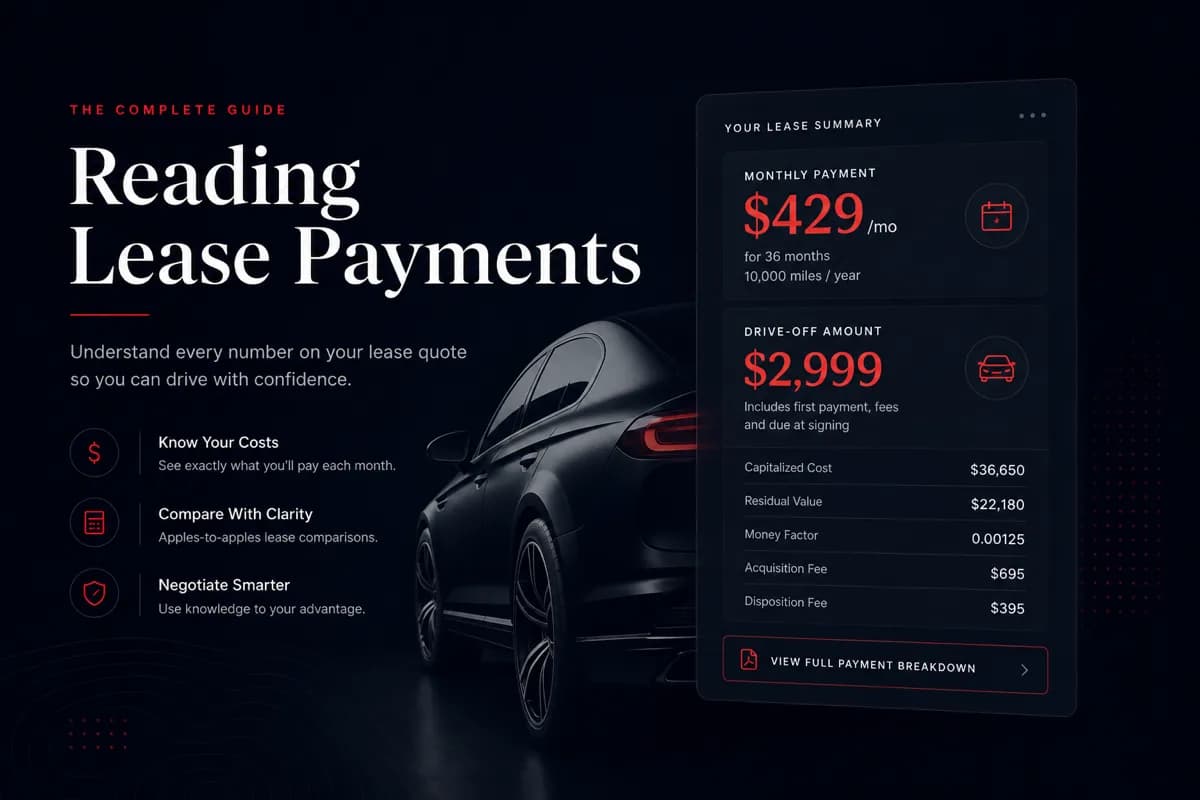
5 minWhat's due at signing on a car lease? Reading payments and drive-off
How to interpret payment, drive-off, term, and mileage when comparing lease listings online or from multiple brokers.
 3 min
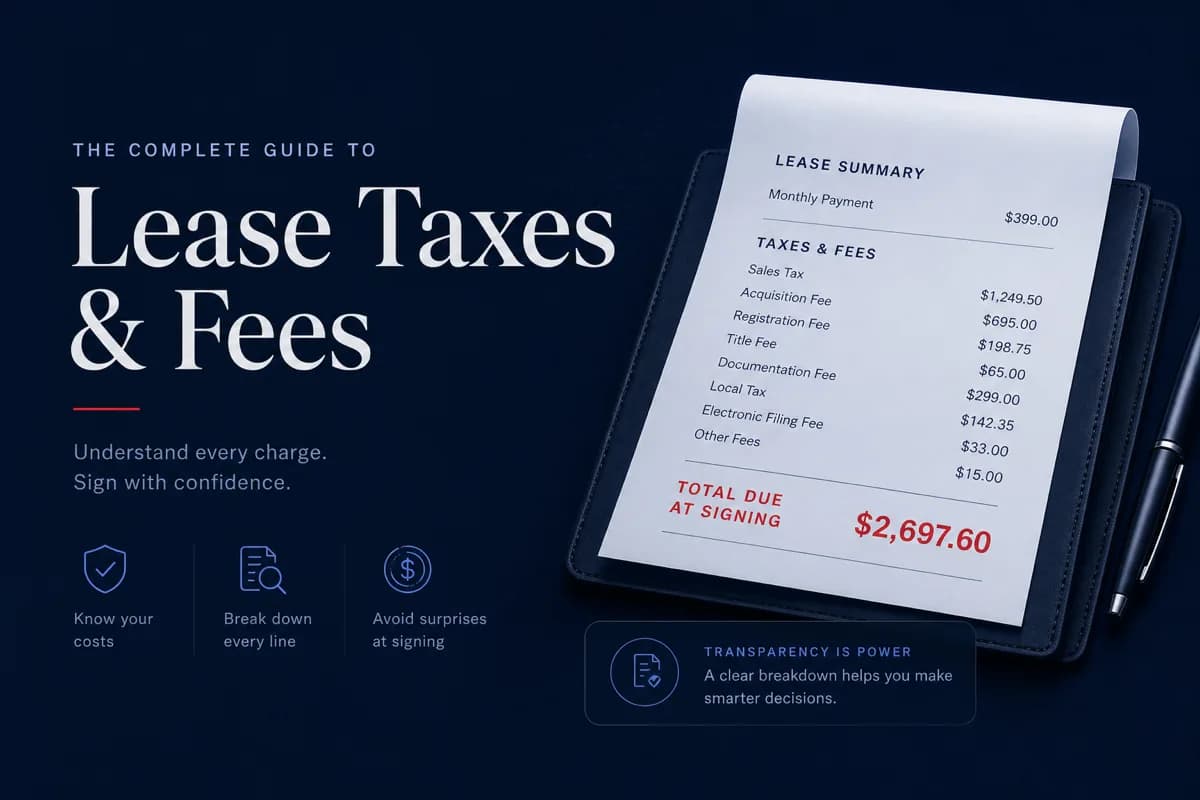
3 minLease taxes and fees explained
What tax and fee lines mean on a lease quote, how states treat lease tax differently, and why drive-off varies for the same payment.
 4 min
4 minLease vs. buy: which is right for you?
A practical framework for choosing between leasing and financing based on how you drive, how long you keep cars, and what you want to optimize for.
Ready to compare?
Compare live listings by payment, drive-off, and term, then request help on a deal when you are ready.