
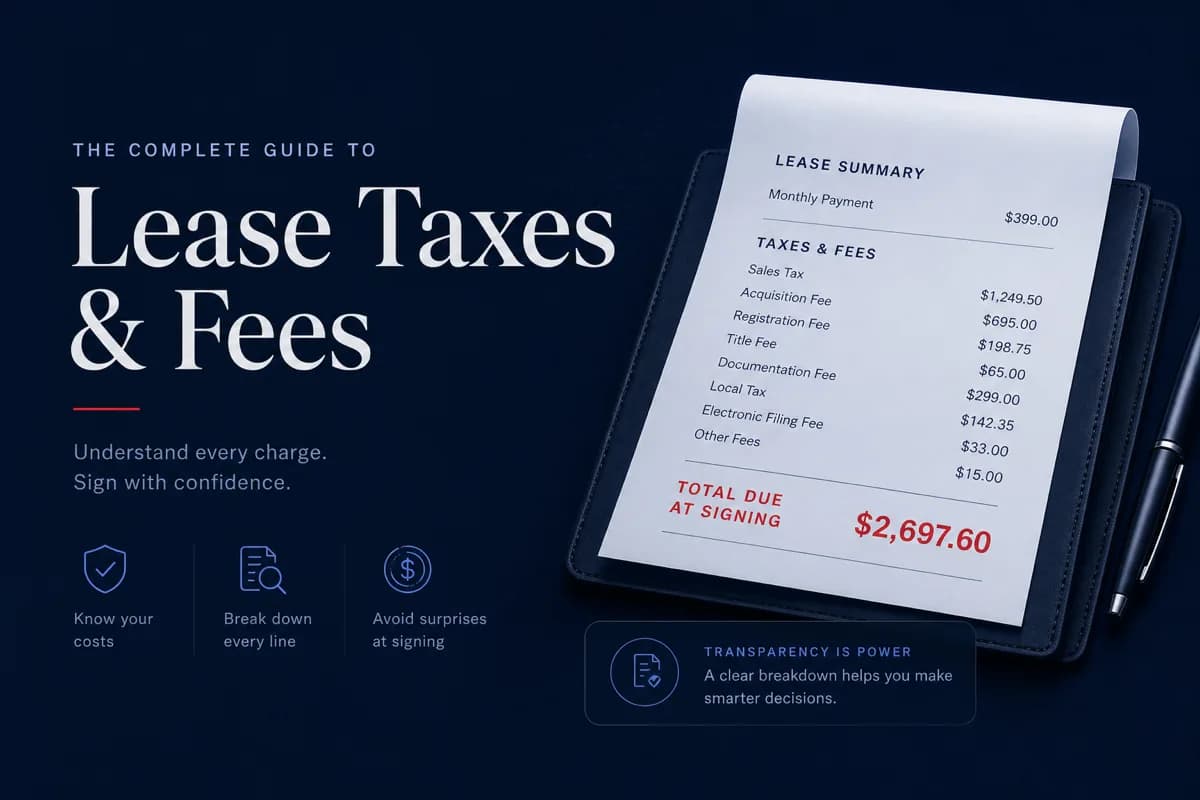
Lease taxes and fees explained
What tax and fee lines mean on a lease quote, how states treat lease tax differently, and why drive-off varies for the same payment.
By LeaseGuru.aiUpdated 3 min read
Two leases with the same monthly payment can require different cash at signing because of tax rules and fee stacks—not because one broker is hiding a better deal.
Some states tax each monthly payment; others tax the full lease upfront. Acquisition, doc, and registration fees land in different places depending on the quote.
Understanding tax and fee lines helps you compare offers fairly and avoid surprise signing bills.
TLDR Quick Guide
- Sales tax treatment varies by state—monthly vs upfront taxation changes drive-off.
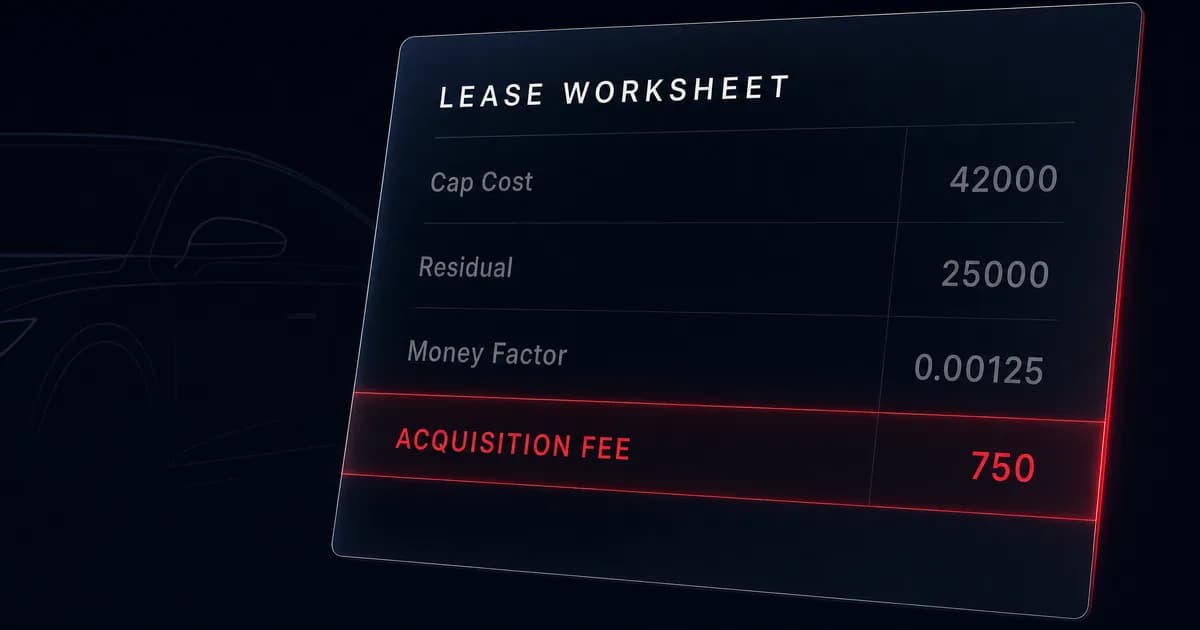
- Acquisition fee is charged by the bank; doc fee is charged by the dealer.
- Registration and title fees are government costs, not negotiable.
- Fees rolled into cap cost raise monthly payment instead of drive-off.
- Verify tax and fees for your garaging address, not the broker’s state.
Sales tax on leases
States tax leases differently. Some charge tax on each monthly payment; others tax total payments upfront at signing; a few use variations on capitalized cost. Your garaging address governs which rules apply.
Upfront vs monthly tax
Upfront-tax states produce larger signing amounts even with $0 cap reduction. Monthly-tax states spread tax across payments—lower drive-off, similar total tax over the term.
Common fee lines
- Acquisition fee — bank origination charge (may be paid upfront or capped)
- Document / admin fee — dealer paperwork charge (varies widely)
- Registration & title — state DMV costs
- Disposition fee — often due at return, not signing (see end-of-lease guide)
Rolled-in vs paid upfront
Paying fees at signing preserves lower monthly payment. Rolling fees into cap cost spreads them across months with rent charge on top. Compare total cost both ways before choosing.
Cross-state and broker quotes
National broker listings may not reflect your local tax until you apply your ZIP. Always re-quote with your registration address before signing.
Relocating with a leased vehicle
Moving to a new state mid-lease can trigger re-registration, a use-tax bill, and different insurance minimums—separate from anything on your original worksheet.
See what is leasing well right now
Live listings ranked by LeaseGuru deal score, with payment, due at signing, and term on each card.
- View deal details
 DemoScore100
2021 Porsche Taycan CPO Turbo S
- Monthly:
- $1,079/mo
- Due at signing:
- $5,499
- Term:
- 24 mo
California
- View deal details
 DemoScore96
2025 Audi A5 Premium
- Monthly:
- $239/mo
- Due at signing:
- $3,999
- Term:
- 24 mo
California
- View deal details
 DemoScore94
2026 Mercedes-Benz GLE SUV 4Matic 350
- Monthly:
- $379/mo
- Due at signing:
- $3,499
- Term:
- 24 mo
South
Key Takeaways
- Tax rules by state drive drive-off differences more than many shoppers expect.
- Acquisition and doc fees are separate—question each line.
- Rolling fees into cap cost lowers signing but raises monthly payment.
- Quote using your garaging ZIP, not the broker’s location.
- Compare total cost including tax and fees, not payment alone.
Ready to see real lease offers?
Share your ZIP and we'll match you with current deals. Free, no obligation.
FAQs
Personal lease tax deductibility is limited for most consumers. Business users may deduct differently—ask a tax advisor for your situation.
In upfront-tax states, you may pay tax on total lease payments at signing, which feels larger than tax rolled into a loan payment. Total tax paid depends on state rules and rate.
Sometimes dealers waive or discount it during promotions. It is a real bank charge—if waived, verify nothing else increased to compensate.
When sources provide drive-off, we display it. Tax detail may still require a full quote from the broker with your ZIP applied.
Related guides
 5 min
5 minAcquisition (bank) fees by brand
What each captive publishes as its acquisition or bank fee on official lease ads, and which major lenders still will not print the number.
 5 min
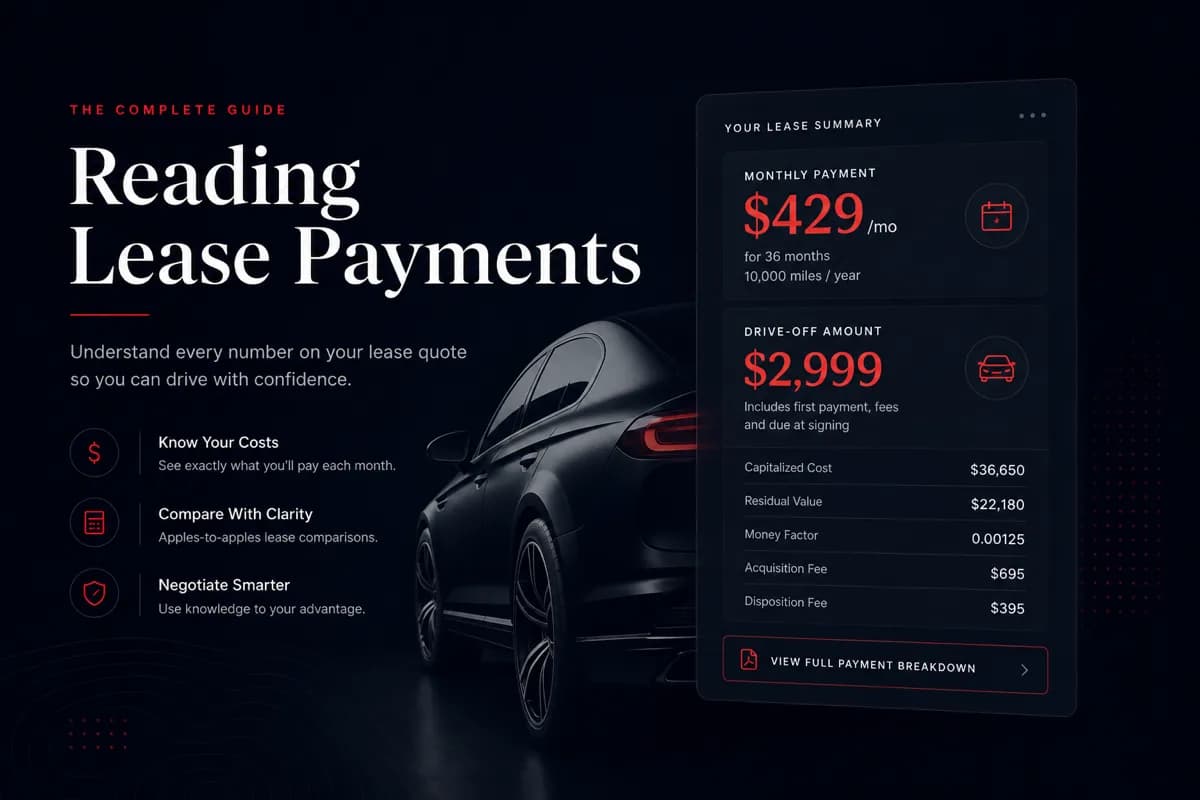
5 minWhat's due at signing on a car lease? Reading payments and drive-off
How to interpret payment, drive-off, term, and mileage when comparing lease listings online or from multiple brokers.
 4 min
4 minZero-down lease deals: what $0 down really means
Why “$0 down” and “no money down” lease deals still cost money at signing, and how to read drive-off when comparing zero-down specials.
Ready to compare?
Compare live listings by payment, drive-off, and term, then request help on a deal when you are ready.