
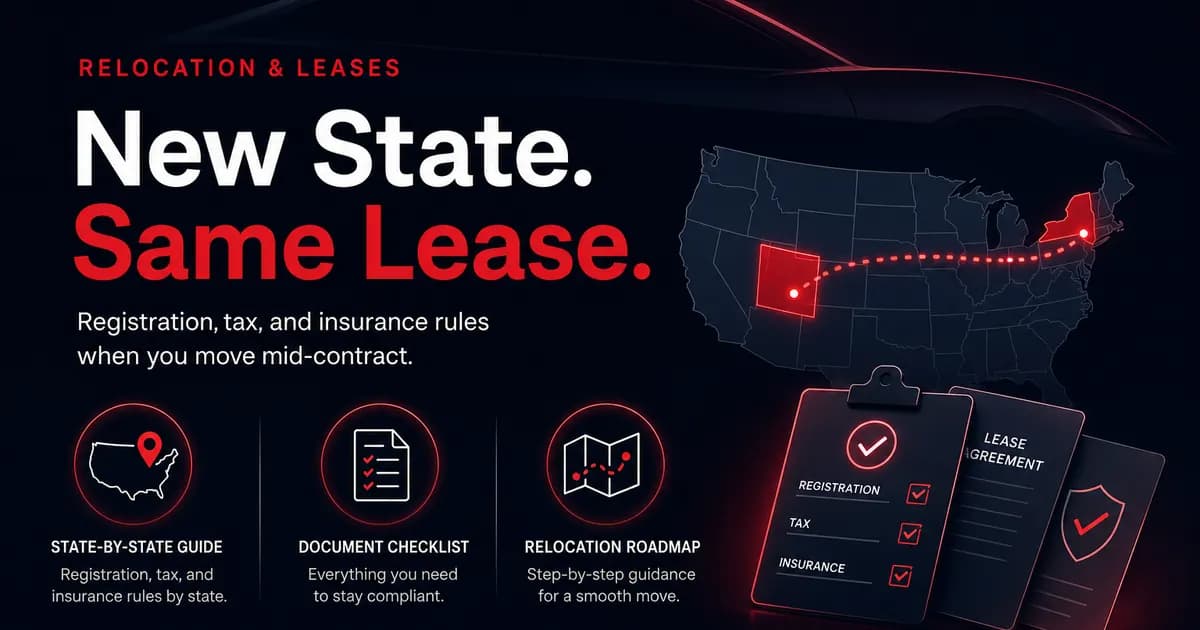
Moving out of state with a leased car
Registration, tax, and insurance when you move mid-lease—and how to notify your lessor and avoid surprise fees.
By LeaseGuru.aiUpdated 3 min read
A job transfer or cross-country move does not pause your lease obligation. You must update garaging address, registration, and insurance—and understand how sales tax rules differ between states.
Most captives allow relocation if you follow their process, but some moves trigger tax adjustments or require new inspections. Ignoring paperwork can create registration holds or default flags.
This guide covers practical steps when you relocate with a leased vehicle—not upfront tax at signing.
TLDR Quick Guide
- Notify the lessor and update garaging address promptly after you move.
- Registration must match your new state; the lessor holds title.
- Sales/use tax treatment varies—monthly-tax vs upfront-tax states differ.
- Insurance minimums and inspection rules change by state.
- Transfer, buyout, or termination may beat relocating if tax or fees are severe.
Registration and garaging address
Your lease contract specifies where the vehicle is garaged. After a permanent move, update address with the captive and register the vehicle in your new state. The lessor owns title; you work through their title/registrar process or a local DMV with their power of attorney forms.
Notify the lessor first
Call the captive lease customer line before registering elsewhere. They may send relocation packets, require odometer statements, or flag accounts that move without notice.
Sales and use tax when relocating
States tax leases differently—some charge tax on each payment, others on total rent upfront. Moving from a monthly-tax state to an upfront-tax state (or vice versa) can create true-up bills or credits. Rules vary; ask the captive for a relocation tax estimate in writing.
Monthly vs upfront tax states
If you paid tax in state A on monthly payments but garaged in state B that taxes upfront, you may owe additional tax on remaining rent. Some states offer credits for tax already paid—documentation matters.
Insurance and inspections
Update insurance to meet new state minimums and garaging ZIP. Some states require emissions or safety inspections before registration. Gap and excess wear coverage travel with the contract but confirm insurer licensing in the new state.
Mileage and lessor tracking
Long relocation drives can burn mileage allowance faster. Log odometer before and after the move and consider whether a mileage add-on is cheaper before you cross thresholds.
When to transfer, buy out, or terminate
If tax true-up or registration costs are large—or the vehicle no longer fits your new life—compare early termination, lease transfer, or buyout versus completing the move. Pull-ahead programs may help if you replace with the same brand.
See what is leasing well right now
Live listings ranked by LeaseGuru deal score, with payment, due at signing, and term on each card.
- View deal details
 DemoScore100
2021 Porsche Taycan CPO Turbo S
- Monthly:
- $1,079/mo
- Due at signing:
- $5,499
- Term:
- 24 mo
California
- View deal details
 DemoScore96
2025 Audi A5 Premium
- Monthly:
- $239/mo
- Due at signing:
- $3,999
- Term:
- 24 mo
California
- View deal details
 DemoScore94
2026 Mercedes-Benz GLE SUV 4Matic 350
- Monthly:
- $379/mo
- Due at signing:
- $3,499
- Term:
- 24 mo
South
Key Takeaways
- Update garaging address and notify the captive before registering in a new state.
- Tax treatment can change materially across state lines—get a written estimate.
- Insurance and inspection requirements follow the new state.
- Track mileage during long relocation drives.
- Compare transfer, buyout, or pull-ahead if relocation costs are high.
Ready to see real lease offers?
Share your ZIP and we'll match you with current deals. Free, no obligation.
FAQs
Generally no for a permanent move. Most states require registration where the vehicle is garaged. Temporary student or military exceptions exist—confirm with DMV and lessor.
Monthly payment usually stays fixed, but tax true-ups or registration fees can add separate charges. Ask the captive before you move.
Yes—update garaging address and meet new state minimums. Lapses can violate your lease contract.
If the captive allows assumption, a credit-qualified buyer can take over the contract—sometimes cheaper than relocating a vehicle you no longer need.
Related guides
 5 min
5 minLease transfer and assumption policy by brand
Which captives publish a transfer or assumption program, the fee, and who remains liable — sourced from lender pages only.
 3 min
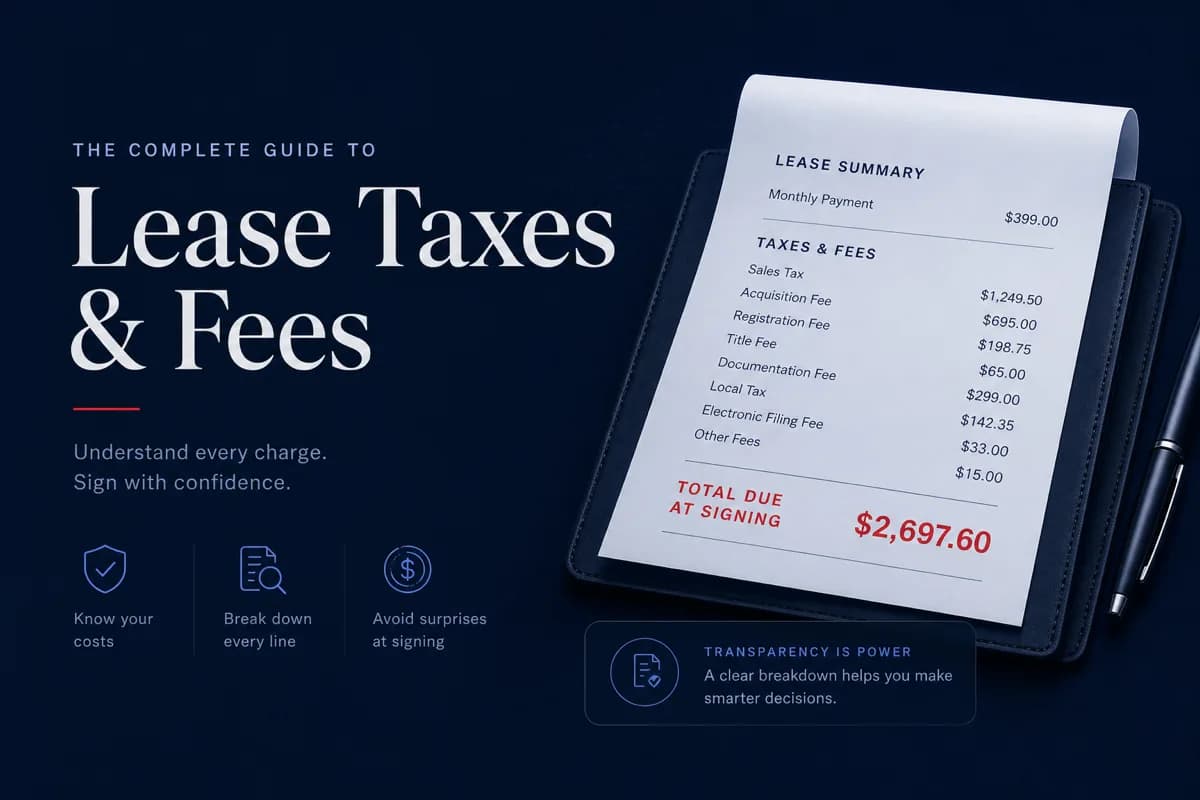
3 minLease taxes and fees explained
What tax and fee lines mean on a lease quote, how states treat lease tax differently, and why drive-off varies for the same payment.
 4 min
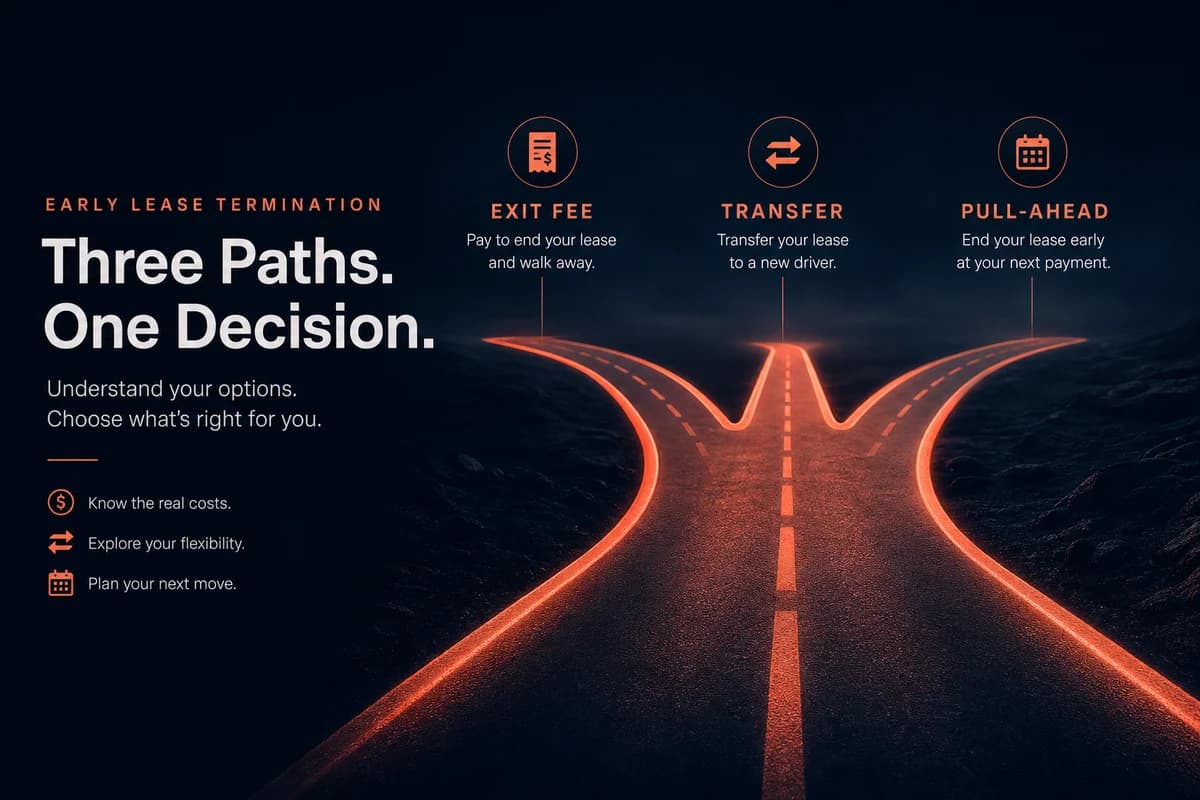
4 minEarly lease termination and transfers
How early lease termination works, transfer and swap options, pull-ahead programs, and when buyout beats paying exit fees.
Ready to compare?
Compare live listings by payment, drive-off, and term, then request help on a deal when you are ready.