
Early lease termination and transfers
How early lease termination works, transfer and swap options, pull-ahead programs, and when buyout beats paying exit fees.
By LeaseGuru.aiUpdated 4 min read
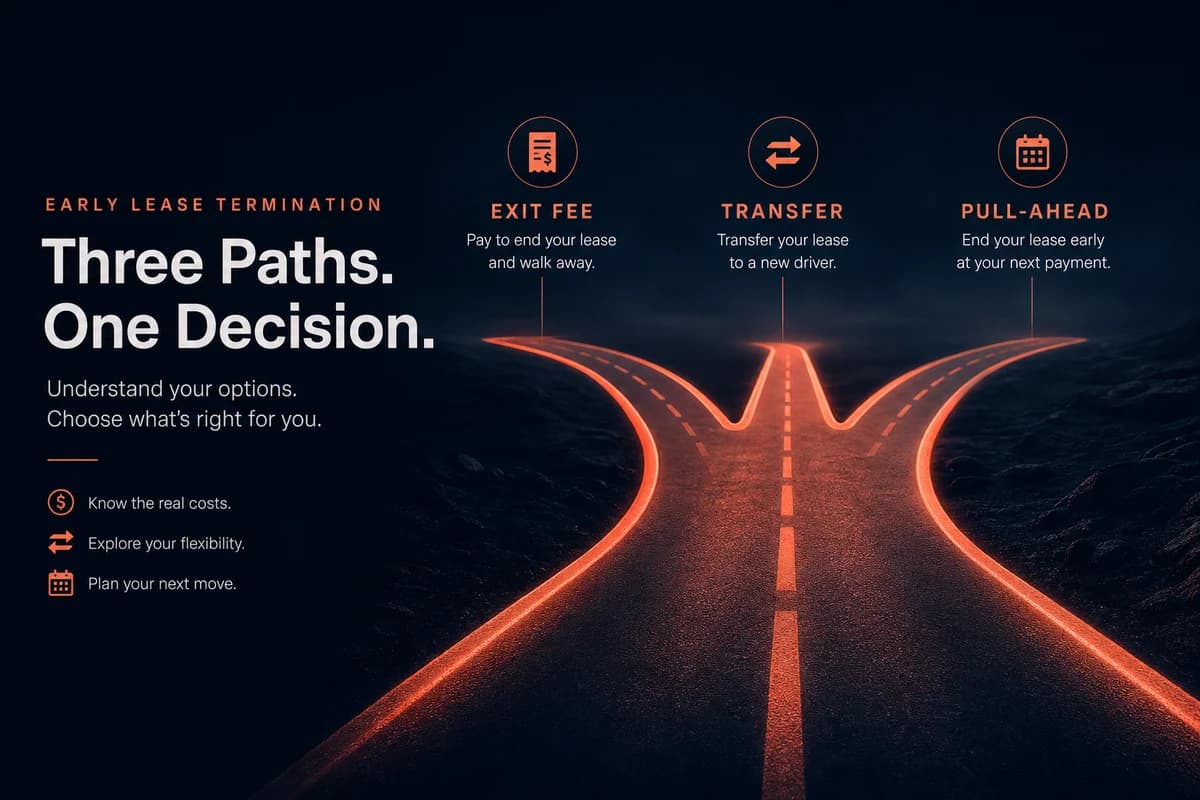
Life changes—job relocation, growing family, or payment stress—can make you want out of a lease before maturity. Early exit is usually expensive because you remain responsible for remaining payments and the gap between payoff and vehicle value.
Alternatives exist: lease transfers to credit-qualified buyers, manufacturer pull-ahead offers when you lease again, or buying out and selling if market value cooperates. Defaulting or voluntary surrender has credit consequences you should avoid if possible.
This guide explains standard early termination math, transfer basics, and programs that can reduce exit cost.
TLDR Quick Guide
- Early termination typically owes remaining rent plus payoff shortfall vs vehicle value.
- Lease transfer assigns the contract to a new lessee if the lessor approves.
- Pull-ahead programs credit remaining payments when you lease or buy same brand.
- Buyout plus private sale can beat termination fees if market value is strong.
- Voluntary surrender without paying obligation damages credit—treat as last resort.
Standard early termination math
Lessors calculate an early payoff: remaining payments, unpaid fees, and the difference between that payoff and the car’s current wholesale or market value. If you are upside-down, you pay the deficiency. Programs and state rules vary—request a formal payoff quote in writing.
Voluntary vs default
Voluntary early termination with full payment of the quote closes the contract cleanly. Stopping payments and surrendering the vehicle can trigger repossession, deficiency collections, and serious credit damage similar to loan default.
Lease transfer and swap basics
Some captives allow lease assumption—transferring the contract to a new lessee who passes credit approval. Third-party swap marketplaces facilitate matching sellers with buyers for a fee. Transfers are not guaranteed; lessor approval, transfer fees, and remaining term affect attractiveness.
When transfer makes sense
- You have many months left on a payment below current market
- Vehicle mileage is well inside allowance with clean wear
- Lessor allows assumption and transfer fee is acceptable
- You find a credit-qualified buyer quickly
Risks
You may remain liable if the new lessee defaults unless the contract releases you completely. Read assumption terms and confirm full release from the lessor.
Pull-ahead and loyalty programs
Manufacturers sometimes waive remaining payments—or a set number of months—when you lease or purchase a new vehicle from the same brand. These pull-ahead offers are promotional and time-limited. They can be the cheapest exit if you were planning to replace the car anyway.
How to ask
Contact the captive lease-end department and your brand dealer before paying a large termination quote. Ask about current pull-ahead, loyalty lease, and conquest programs tied to early replacement.
Alternatives before paying exit fees
Compare three numbers: formal early termination quote, buyout price versus private sale value, and transfer marketplace bids. If you are only slightly over mileage or facing wear charges at natural maturity, riding out the term may still beat early exit.
Lease vs buy reconsideration
If uncertainty about your timeline caused the problem, a shorter replacement lease or purchasing a reliable used vehicle may reduce future exit risk—run lease vs buy math for your hold period.
Short-term car leases: Need a car for a year or less? See short-term lease options.
See what is leasing well right now
Live listings ranked by LeaseGuru deal score, with payment, due at signing, and term on each card.
- View deal details
 DemoScore100
2021 Porsche Taycan CPO Turbo S
- Monthly:
- $1,079/mo
- Due at signing:
- $5,499
- Term:
- 24 mo
California
- View deal details
 DemoScore96
2025 Audi A5 Premium
- Monthly:
- $239/mo
- Due at signing:
- $3,999
- Term:
- 24 mo
California
- View deal details
 DemoScore94
2026 Mercedes-Benz GLE SUV 4Matic 350
- Monthly:
- $379/mo
- Due at signing:
- $3,499
- Term:
- 24 mo
South
Key Takeaways
- Early termination is costly—get a written payoff quote before deciding.
- Lease transfer can work with lessor approval; confirm you are fully released.
- Pull-ahead programs may waive months if you stay with the brand.
- Buyout and resale can beat termination when market value is high.
- Avoid default—pay obligations or use approved exit paths to protect credit.
Ready to see real lease offers?
Share your ZIP and we'll match you with current deals. Free, no obligation.
FAQs
No. You cannot simply drop off the keys without paying the early termination amount in your contract. Normal return is at scheduled maturity.
No. They match buyers and sellers; the captive lender must approve credit and assumption. Budget time and transfer fees.
Paying the full termination quote cleanly usually avoids major credit harm. Unpaid deficiency after surrender or repo can hurt approval for years.
One-pay prepays rent charge but does not eliminate early exit deficiency. You may forfeit prepaid amounts. Low early-exit risk favors monthly programs with gap coverage.
Related guides
 4 min
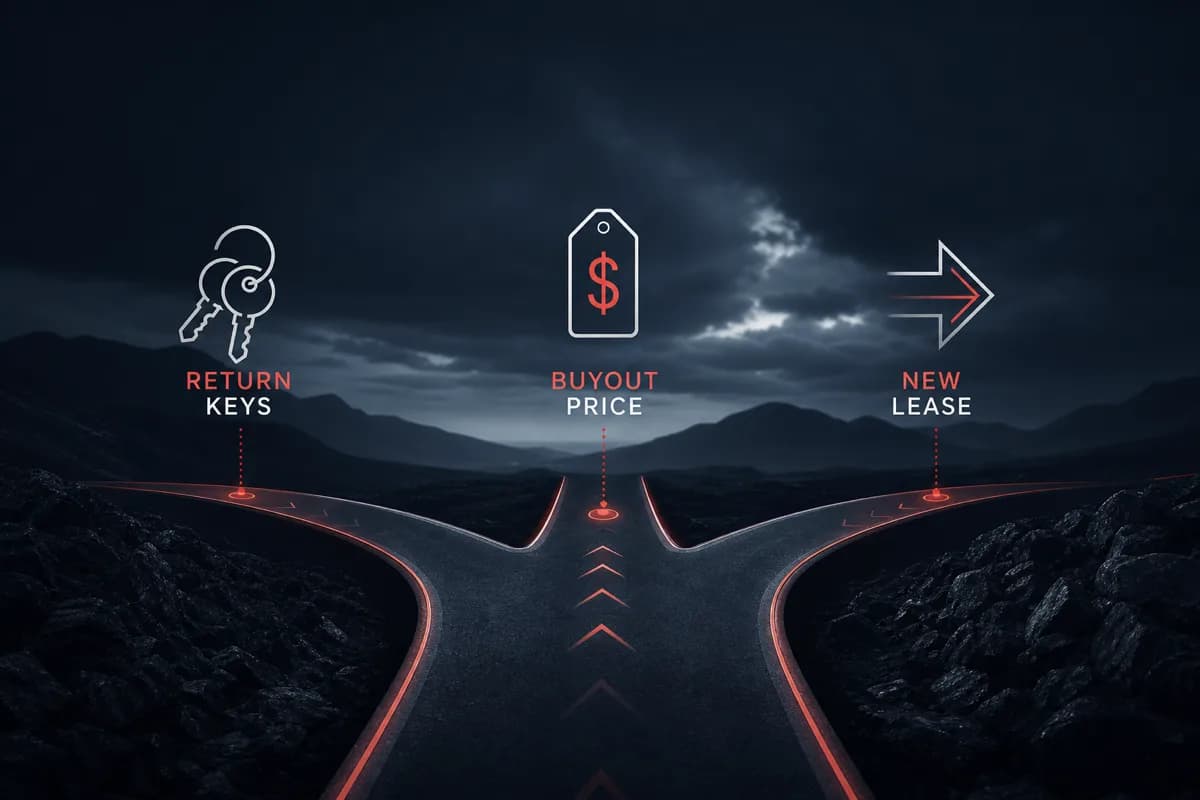
4 minEnd of lease: return, buyout, and next steps
Your options when a lease term ends, how charges are assessed, and how to plan ahead so return day is smooth.
 5 min
5 minLease transfer and assumption policy by brand
Which captives publish a transfer or assumption program, the fee, and who remains liable — sourced from lender pages only.
 6 min
6 minLease-end buyout policy by brand
Lessee purchase-option rules and third-party buyout language, taken only from captive or OEM pages.
Ready to compare?
Compare live listings by payment, drive-off, and term, then request help on a deal when you are ready.