
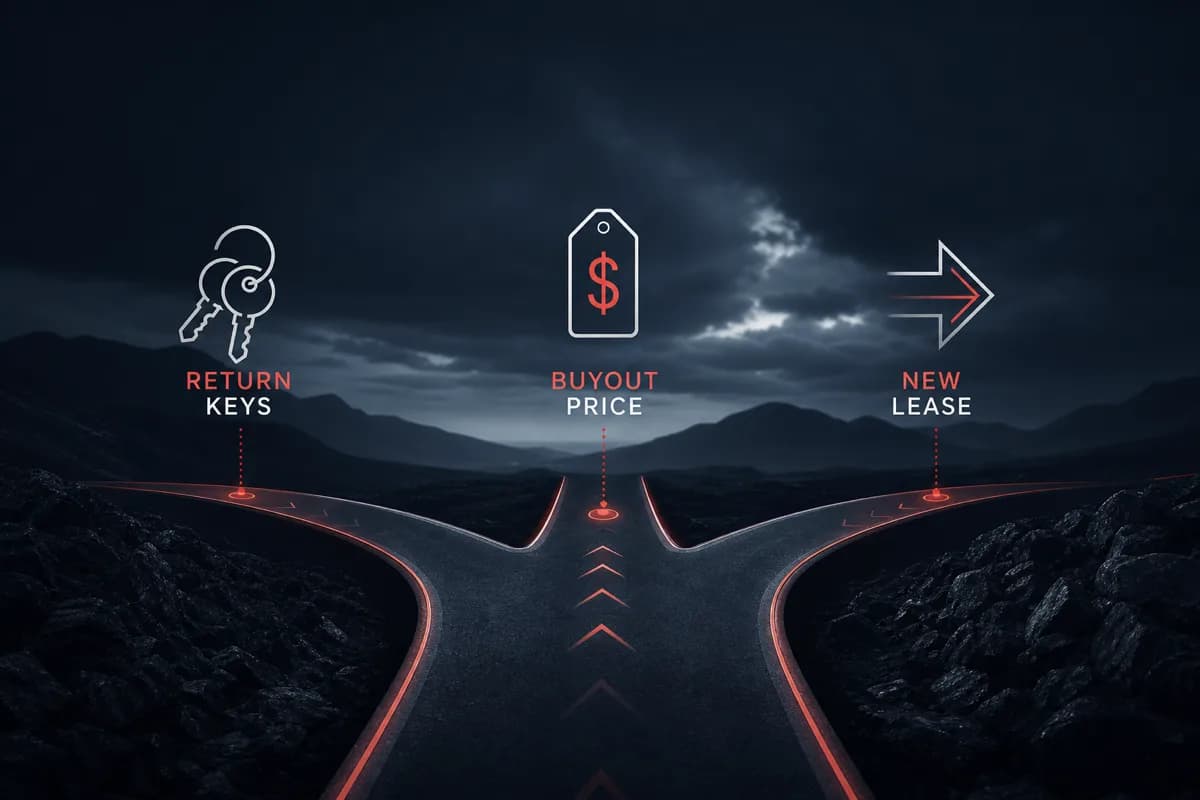
End of lease: return, buyout, and next steps
Your options when a lease term ends, how charges are assessed, and how to plan ahead so return day is smooth.
By LeaseGuru.aiUpdated 4 min read
Every closed-end lease ends with a decision: return the vehicle, buy it at the contract purchase option, or replace it with a new lease or purchase—sometimes with loyalty programs in the mix.
Charges for excess mileage and wear can surprise drivers who focused only on monthly payment three years earlier. Planning starts about 90 days before maturity.
This guide walks through standard end-of-lease paths, common fees, and early exit risks.
TLDR Quick Guide
- Typical options: return, buy out at residual/purchase option, or lease/buy another vehicle.
- Schedule inspection early to fix excess wear if needed.
- Excess mileage fees apply per contract—often $0.15–$0.30 per mile.
- Disposition fee may be waived if you lease again with the same brand.
- Early termination is expensive—avoid unless you have a pull-ahead program.
Standard end-of-lease paths
Most consumers return the car to the dealer or arrange pickup, pay any end-of-lease charges, and walk away. If your contract includes a purchase option, you can buy the vehicle at the predetermined price—compare that to market value before deciding.
Return process
You will schedule a vehicle inspection, remove personal items, and return keys and accessories. Lenders may use third-party inspectors to assess wear beyond normal use.
Buyout
Purchase option price is in your contract—often tied to residual value plus fees. If market value exceeds buyout, buying can be a good deal; if not, returning may be smarter.
Excess wear and mileage
Leases include an annual mileage allowance. Miles above that allowance incur per-mile charges at return. Wear beyond “normal”—large dents, torn upholstery, missing equipment—can also generate bills.
Inspection tips
- Fix minor cosmetic issues if cheaper than lease charge quotes.
- Ensure all keys, mats, and charging cables are present.
- Document existing wear at lease start if you did not already.
Mileage fees
If you are over allowance, compare paying mileage fees versus buying the car and selling privately—sometimes buyout beats excess-mile penalties.
Early termination
Ending a lease early usually triggers remaining payments plus the difference between payoff and vehicle value. Some brands offer pull-ahead programs if you lease again—check before paying large exit fees.
Plan 90 days before maturity
- Check mileage trend against allowance—adjust driving or plan buyout.
- Get early buyout quote and compare to retail market.
- Browse replacement leases with loyalty incentives if staying with the brand.
- Schedule pre-return inspection if offered by your lessor.
See what is leasing well right now
Live listings ranked by LeaseGuru deal score, with payment, due at signing, and term on each card.
- View deal details
 DemoScore100
2021 Porsche Taycan CPO Turbo S
- Monthly:
- $1,079/mo
- Due at signing:
- $5,499
- Term:
- 24 mo
California
- View deal details
 DemoScore96
2025 Audi A5 Premium
- Monthly:
- $239/mo
- Due at signing:
- $3,999
- Term:
- 24 mo
California
- View deal details
 DemoScore94
2026 Mercedes-Benz GLE SUV 4Matic 350
- Monthly:
- $379/mo
- Due at signing:
- $3,499
- Term:
- 24 mo
South
Key Takeaways
- Know your purchase option price and market value before lease end.
- Mileage and wear charges are contractually defined—plan ahead.
- Pre-return inspection helps avoid surprise bills.
- Early termination is costly unless a loyalty pull-ahead applies.
- Start replacement shopping 60–90 days before maturity for best inventory.
Ready to see real lease offers?
Share your ZIP and we'll match you with current deals. Free, no obligation.
FAQs
Usually the same brand’s dealer can accept a return, but procedures vary. Call ahead and confirm with your lessor’s lease-end department.
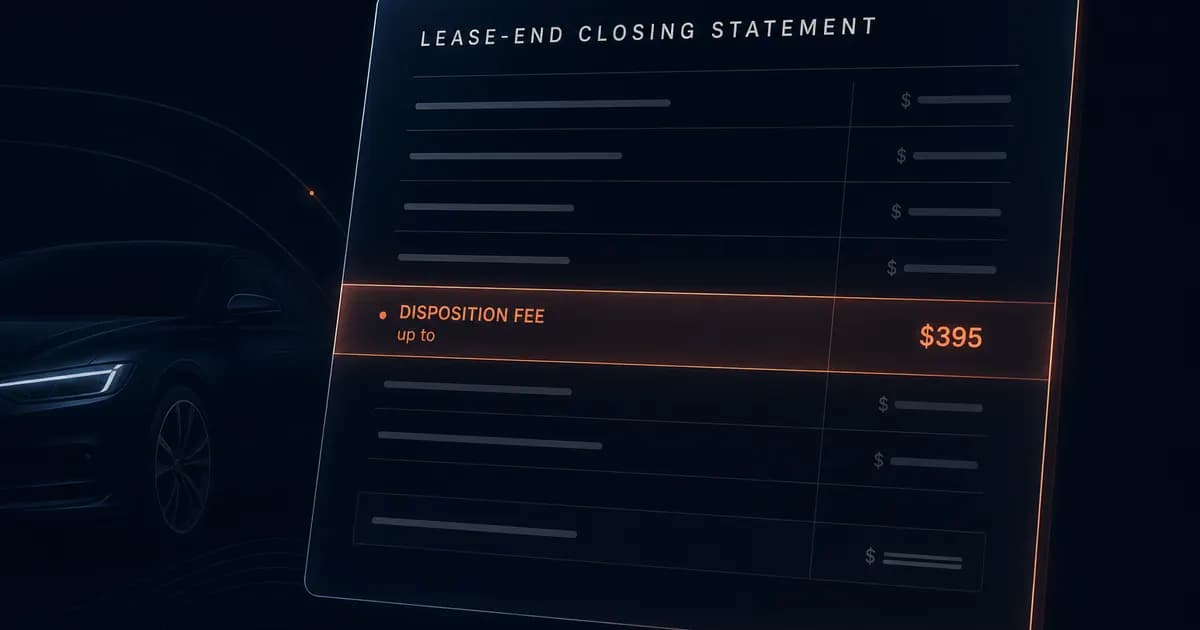
Many contracts include a disposition fee at return—published amounts run $300 to $495 depending on the captive lender, and most say 'up to,' so your contract sets the real number. Every major captive waives it if you take another vehicle from the same brand through the same lender, usually within 30 days. You do not pay it at all if you buy the car out. See our disposition fees by brand guide for what each lender publishes.
Exercise your purchase option if the buyout price is at or below market. You can also ask about lease extension if you need more time to decide.
If you pay all obligations, credit impact is neutral. Default or voluntary surrender with deficiency balance can hurt similarly to loan default.
Related guides
 9 min
9 minDisposition fees by brand
What each captive lender publishes as its lease-end disposition fee, why the number is a ceiling rather than a certainty, and the one move that removes it.
 5 min
5 minCar leasing 101: how leasing works and what to expect
A plain-English overview of auto leasing: structure, trade-offs versus buying, and what to expect when your term ends.
 4 min
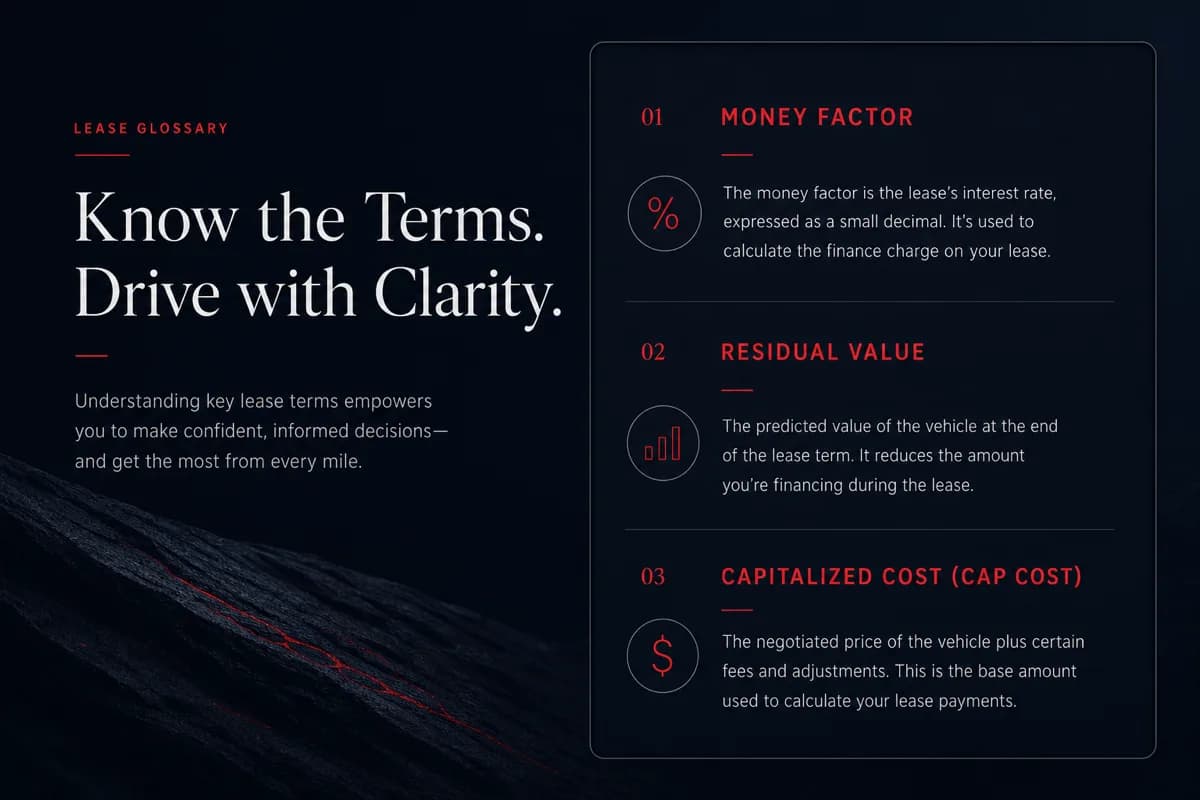
4 minCar lease glossary: key terms explained
Quick definitions of terms you will see in lease ads, quotes, and contracts—written for shoppers, not accountants.
Ready to compare?
Compare live listings by payment, drive-off, and term, then request help on a deal when you are ready.