

Residual value explained
What residual value means on a lease, why it lowers or raises your payment, and how to use it for buyout decisions at term end.
By LeaseGuru.aiUpdated 5 min read
Residual value is the lessor’s estimate of what the car will be worth at lease end—expressed as a dollar amount or percentage of MSRP. It is one of the three numbers that define your payment, alongside cap cost and money factor.
A higher residual usually lowers monthly payment because you are financing less depreciation. But it also sets your contractual buyout price—which may be above or below real market value when the term ends.
This guide explains who sets residual, how it flows into payment math, and how to use it when deciding whether to buy, return, or replace at lease end.
TLDR Quick Guide
- Residual = expected vehicle value at lease end; higher residual often means lower payment.
- Set by the captive lender by model, trim, term, and mileage tier—not negotiated like price.
- Depreciation you pay ≈ cap cost minus residual, spread over the term.
- Purchase option price is usually tied to residual plus fees—compare to market before buying out.
- Subvented residuals on incentive programs can create unusually strong lease payments.
What is residual value?
When you lease, you pay for the vehicle’s expected loss in value during the term—the spread between what you are financing (cap cost) and what the lessor expects the car to be worth at return (residual). That end value is the residual.
Percentage vs dollar amount
Worksheets often show residual as a percentage of MSRP—e.g. 58% on a 36-month lease. The dollar residual is that percentage applied to the MSRP or adjusted cap, depending on program rules. Confirm which base the lessor uses.
Mileage tier effect
Higher annual mileage lowers residual because the car is expected to be worth less at return with more miles. That is why 15,000-mile leases cost more per month than 10,000-mile leases on the same vehicle.
Who sets residual—and can you change it?
Captive finance companies publish residual tables by model, term, and mileage. Your dealer or broker pulls the residual for your structure. Unlike selling price, residual is not something you haggle at the desk—though incentive programs may use artificially high residuals to subsidize payment.
Captive vs third-party lessors
Manufacturer captives often support subvented residuals on slow sellers or new models. Independent banks may use more conservative residuals, raising payment but sometimes offering buyout prices closer to market at lease end.
Negotiation boundary
Focus negotiation on cap cost (selling price), fees, and money factor markup—not residual percentage. If payment seems too good, check whether a bumped residual or heavy cap reduction is doing the work.
How residual affects monthly payment
All else equal, a higher residual shrinks the depreciation portion of payment. That is why subsidized lease specials often pair strong residuals with low money factor. When comparing two quotes, mismatched residuals explain payment gaps as much as cap cost differences.
Worked example (conceptual)
On a $40,000 cap cost, a 60% residual ($24,000) means you amortize $16,000 of depreciation over the term. At 50% residual ($20,000), you amortize $20,000—higher payment. Finance charge on top depends on money factor.
Residual vs market value at lease end
Your purchase option is usually based on residual plus applicable fees. If used-car market prices are above that buyout, exercising the option can be a bargain. If market is below buyout, returning the car avoids overpaying for equity you do not have.
Planning 90 days out
Check buyout quote against Kelley Blue Book, Edmunds, or live marketplace listings for your trim and mileage. Factor disposition fee and taxes if you buy. See our end-of-lease guide for the full decision tree.
When high residual hurts at buyout
A subsidized high residual gave you a low payment—but your buyout may exceed what the car is worth on the open market. In those cases, returning is often rational even if you liked the car.
See what is leasing well right now
Live listings ranked by LeaseGuru deal score, with payment, due at signing, and term on each card.
- View deal details
 DemoScore100
2021 Porsche Taycan CPO Turbo S
- Monthly:
- $1,079/mo
- Due at signing:
- $5,499
- Term:
- 24 mo
California
- View deal details
 DemoScore96
2025 Audi A5 Premium
- Monthly:
- $239/mo
- Due at signing:
- $3,999
- Term:
- 24 mo
California
- View deal details
 DemoScore94
2026 Mercedes-Benz GLE SUV 4Matic 350
- Monthly:
- $379/mo
- Due at signing:
- $3,499
- Term:
- 24 mo
South
Key Takeaways
- Residual is the lessor’s end-of-term value assumption—it drives depreciation and payment.
- Captive lenders set it by model, term, and mileage; you negotiate cap cost, not residual.
- Higher residual usually lowers payment but sets your buyout price.
- Compare purchase option to market value before exercising buyout.
- Align residual assumptions when comparing broker quotes on LeaseGuru.
Ready to see real lease offers?
Share your ZIP and we'll match you with current deals. Free, no obligation.
FAQs
It lowers payment during the lease, which helps cash flow. At lease end, a high residual can mean an expensive buyout if market values dropped. Match strategy to whether you plan to return or buy.
Your contractual residual is fixed at signing for closed-end leases. Market value of the vehicle fluctuates—that is separate from your buyout price.
Programs and market volatility affect electrified models. Incentive residuals may not match real resale yet—verify buyout math before counting on equity.
Listings emphasize payment, drive-off, term, and mileage. Request a full worksheet with residual and money factor from the broker before signing.
Related guides
 4 min
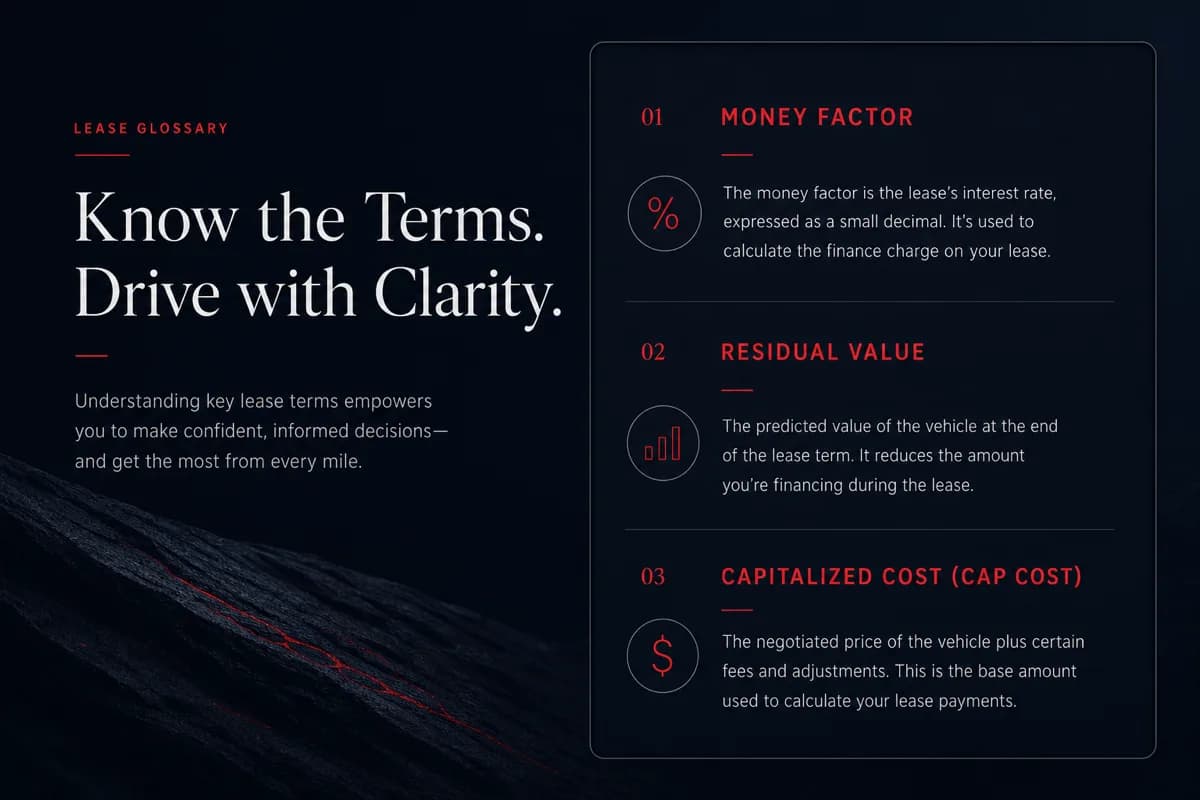
4 minCar lease glossary: key terms explained
Quick definitions of terms you will see in lease ads, quotes, and contracts—written for shoppers, not accountants.
 4 min
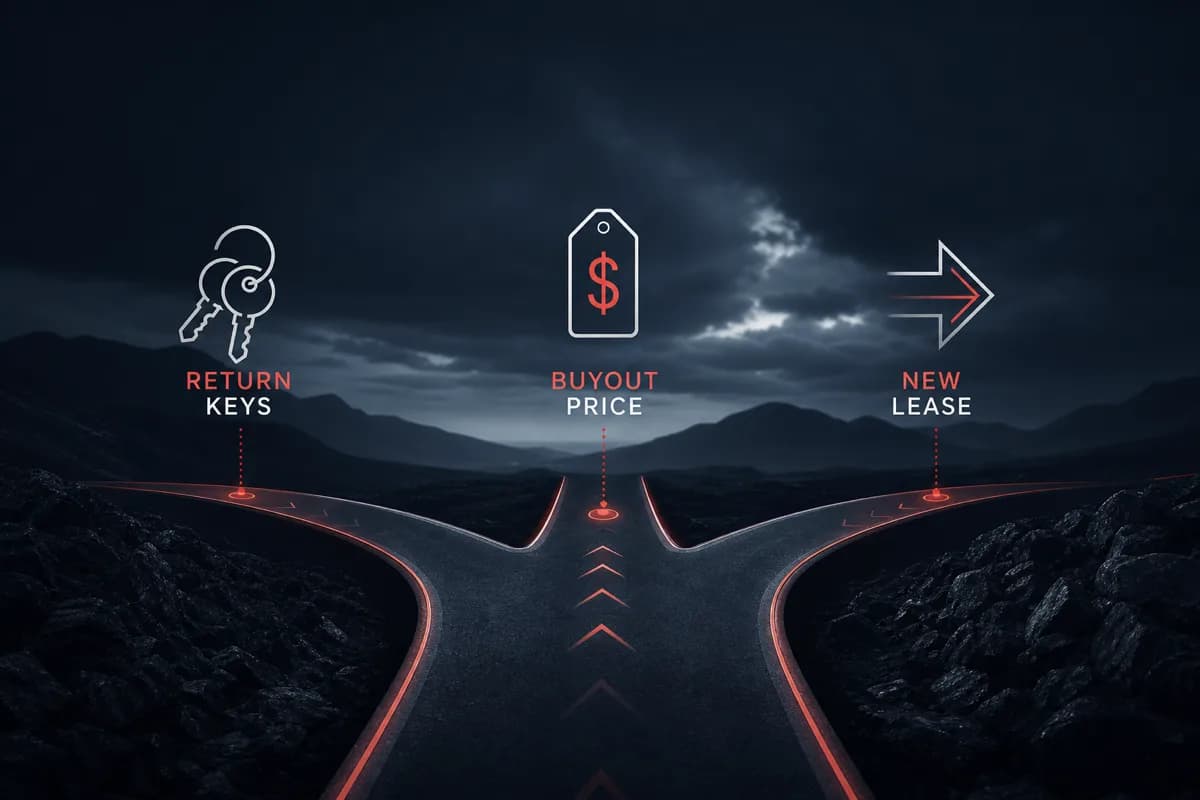
4 minEnd of lease: return, buyout, and next steps
Your options when a lease term ends, how charges are assessed, and how to plan ahead so return day is smooth.
 5 min
5 minMoney factor and APR explained
What money factor means on a lease, how to translate it to an APR-style number, and why finance charge matters when you compare listings.
Ready to compare?
Compare live listings by payment, drive-off, and term, then request help on a deal when you are ready.