

Car leasing 101: how leasing works and what to expect
A plain-English overview of auto leasing: structure, trade-offs versus buying, and what to expect when your term ends.
By LeaseGuru.aiUpdated 5 min read
A car lease is a time-bound contract to use a vehicle—not a path to ownership by default. You pay for the portion of the vehicle’s value you use during the term, plus finance charges and applicable fees.
Leasing can lower your monthly payment versus buying the same vehicle on a loan, but it comes with mileage limits, wear guidelines, and end-of-term decisions. Understanding those trade-offs before you sign helps you avoid surprises.
This guide walks through how leases are structured, how they compare to financing, and what happens when your term ends—so you can compare listings on LeaseGuru with confidence.
TLDR Quick Guide
Here is the essentials of car leasing:
- You pay for depreciation plus rent charge over a fixed term—typically 24 to 39 months.
- Monthly payment is not the full story; compare drive-off, mileage, and total cost.
- Leasing suits drivers who want a newer car every few years with predictable payments.
- At lease end you usually return, buy out, or replace—check your contract for options.
- Always confirm final numbers with the lessor named on the contract before signing.
What is a car lease?
A lease is a contract to use a vehicle for a set period—often 24 or 36 months—in exchange for monthly payments. You are not buying the car outright; you are paying for depreciation plus rent charge (finance) on the amount the lessor expects the vehicle to lose in value over the term.
Closed-end consumer leases
Most retail leases are closed-end: at term end you can return the vehicle, exercise a purchase option if your contract allows, or explore replacement paths offered by your lessor. Your obligation is defined upfront—there is no open-ended residual risk like some commercial leases.
Who sets the numbers
The captive finance company or bank behind the lease sets residual value and money factor. The dealer or broker negotiates selling price and fees. Both layers affect your payment—see our glossary for definitions of each term.
Lease vs. finance (loan)
With a loan, you build equity and own the vehicle once it is paid off. With a lease, you typically pay a lower monthly payment for the same sticker price because you are only covering part of the vehicle’s value over the lease term.
When leasing makes sense
- You want a new vehicle every few years with lower monthly payments.
- You drive within predictable annual mileage limits.
- You prefer fewer long-term repair surprises on newer cars.
When buying makes sense
- You drive very high miles or keep vehicles many years.
- You modify the car or need flexibility beyond lease restrictions.
- You want to build equity instead of recurring payments.
Common lease ingredients
Retail listings and broker quotes usually emphasize monthly payment, term length, and sometimes drive-off. Other contract elements matter just as much for total cost.
Payment drivers
- Capitalized cost (negotiated vehicle price plus rolled-in fees)
- Residual value (expected end-of-term value)
- Money factor (finance charge, similar to interest on a loan)
- Annual mileage allowance and excess-mile fees
Fees to watch
Acquisition fees, disposition fees at return, and registration or doc fees can differ by source. Aggregators like LeaseGuru help you compare published specials, but final numbers are confirmed by the lessor or dealer.
End of lease: returns and options
Near lease end, you may schedule a vehicle inspection, address excess wear according to your lease guide, and either return the car, purchase it if your contract includes a buyout price, or in some cases extend or replace the lease.
State fees, disposition charges, and purchase-option taxes vary—use your contract and your state’s rules as the source of truth.
See what is leasing well right now
Live listings ranked by LeaseGuru deal score, with payment, due at signing, and term on each card.
- View deal details
 DemoScore100
2021 Porsche Taycan CPO Turbo S
- Monthly:
- $1,079/mo
- Due at signing:
- $5,499
- Term:
- 24 mo
California
- View deal details
 DemoScore96
2025 Audi A5 Premium
- Monthly:
- $239/mo
- Due at signing:
- $3,999
- Term:
- 24 mo
California
- View deal details
 DemoScore94
2026 Mercedes-Benz GLE SUV 4Matic 350
- Monthly:
- $379/mo
- Due at signing:
- $3,499
- Term:
- 24 mo
South
Key Takeaways
- A lease covers depreciation and finance charges for a fixed term—you do not own the car unless you buy out.
- Compare total cost, not just monthly payment: drive-off, mileage, and fees all matter.
- Residual and money factor are set by the lessor; selling price is often negotiable.
- Plan for lease-end options early: return, buyout, or replacement.
- Use LeaseGuru to shortlist offers, then verify every line item before signing.
Ready to see real lease offers?
Share your ZIP and we'll match you with current deals. Free, no obligation.
FAQs
Leasing often produces a lower monthly payment for the same vehicle because you are financing less of the car’s value. Over many years, buying and keeping a car is usually cheaper than leasing repeatedly. Compare total out-of-pocket for your expected ownership horizon.
Yes—primarily the selling price that flows into capitalized cost, plus fees and add-ons. Residual and money factor are less flexible and set by the lessor. Always request an itemized quote.
Most leases charge a per-mile fee for miles above your annual allowance. The rate is in your contract—often between $0.15 and $0.30 per mile. Match your allowance to actual driving before you sign.
Captive finance companies tier rates by credit. Better credit typically unlocks lower money factors and better programs. Brokers may show a payment assuming top tier—confirm your tier before committing.
Early termination is usually expensive: you may owe remaining payments plus the difference between the car’s value and your payoff. Some brands offer pull-ahead programs when you lease again—check with your lessor.
Related guides
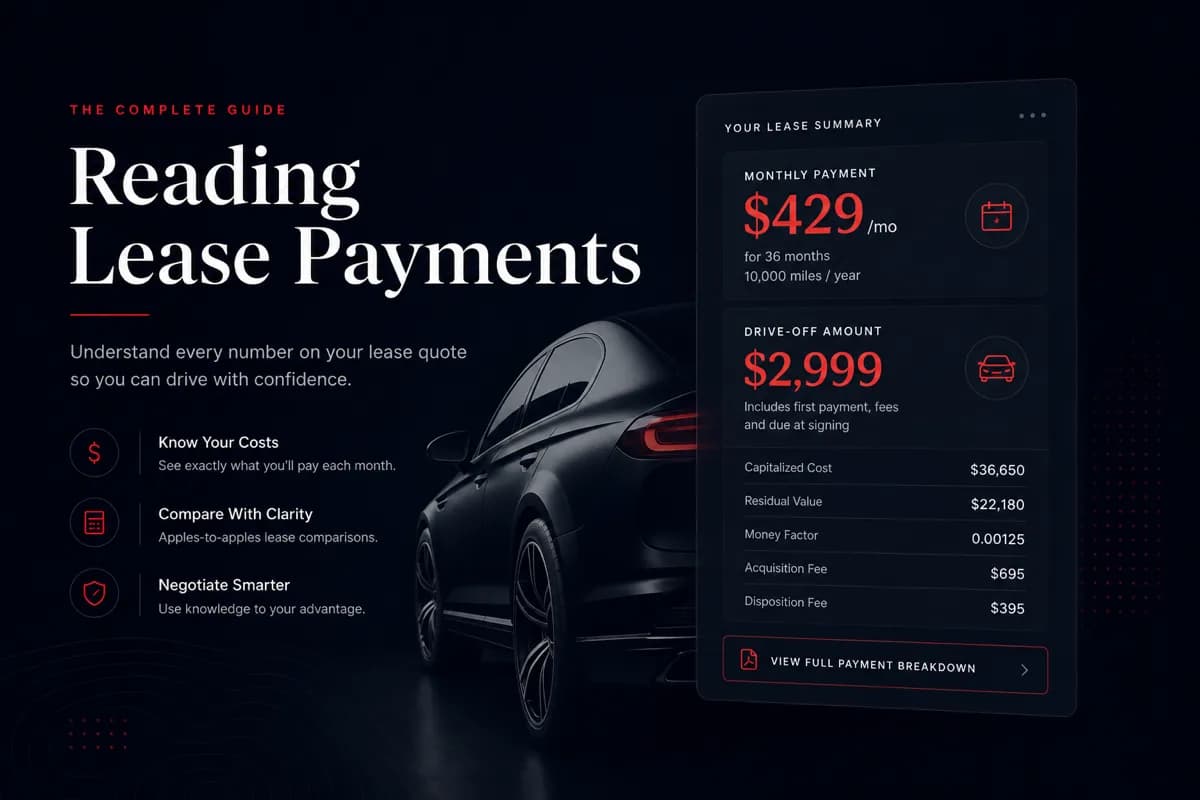 5 min
5 minWhat's due at signing on a car lease? Reading payments and drive-off
How to interpret payment, drive-off, term, and mileage when comparing lease listings online or from multiple brokers.
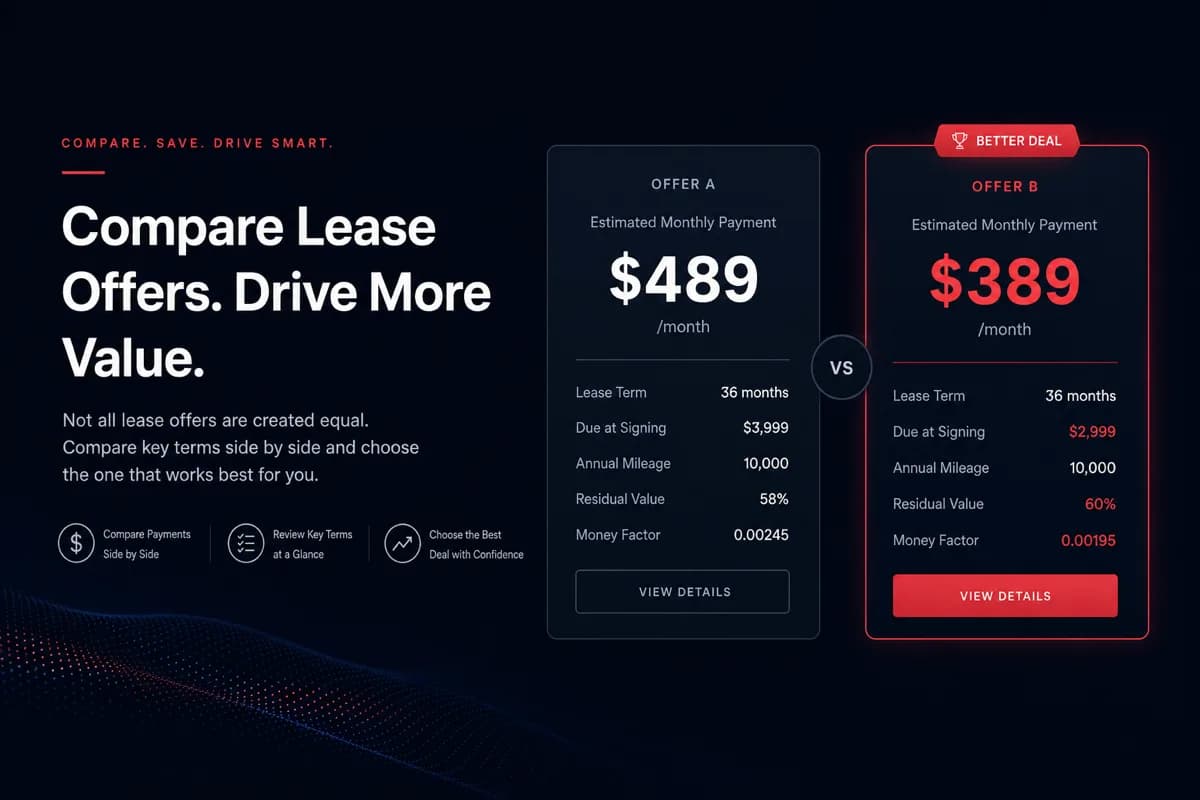 3 min
3 minComparing lease offers across brokers and dealers
How to compare specials from different companies side by side when every site formats payment data differently.
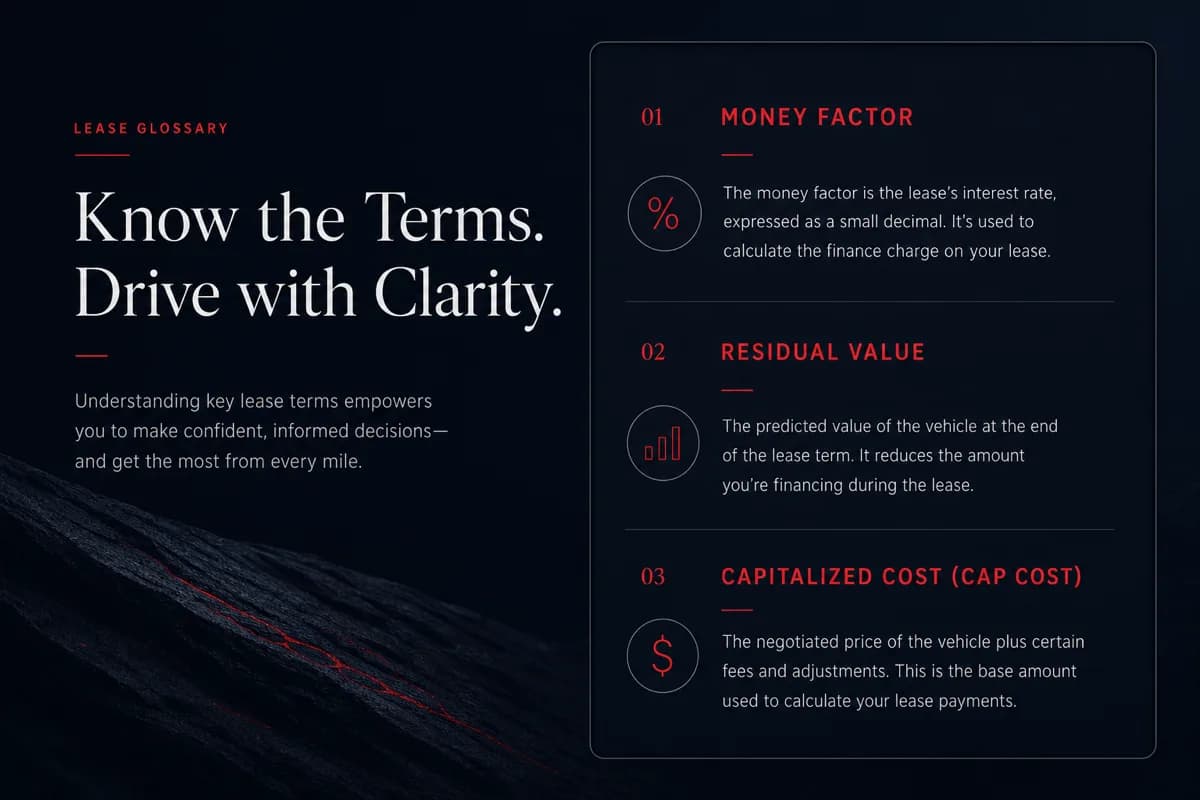 4 min
4 minCar lease glossary: key terms explained
Quick definitions of terms you will see in lease ads, quotes, and contracts—written for shoppers, not accountants.
Ready to compare?
Compare live listings by payment, drive-off, and term, then request help on a deal when you are ready.