
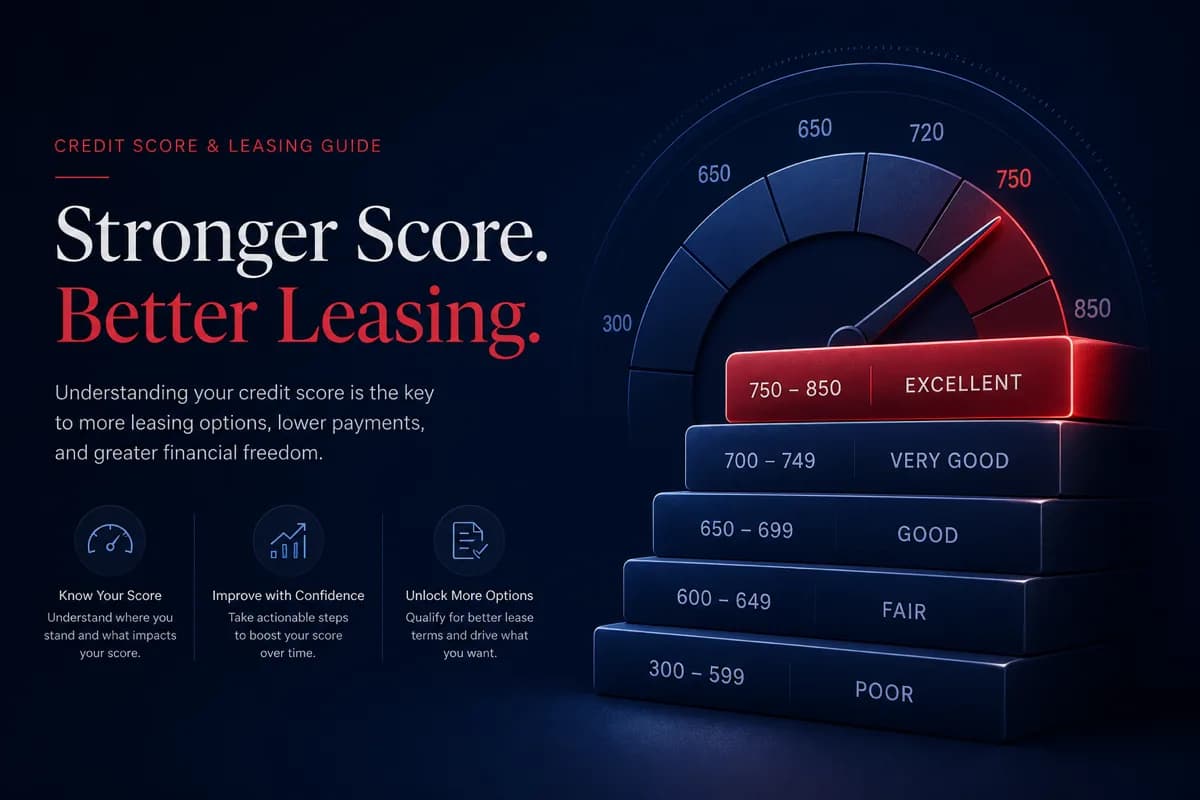
Credit score and car leasing
Why lease ads assume top-tier credit, how lenders tier money factor, and what to do if your score is still improving.
By LeaseGuru.aiUpdated 3 min read
Lease approvals and pricing run through captive finance companies that bucket applicants into credit tiers. The payment in a national ad often assumes the best tier—not the rate you will see if your score lands lower.
Money factor works like interest on a loan: better credit usually unlocks lower factors and better subvented programs. That changes both approval odds and monthly cost.
This guide explains how credit shapes lease quotes and what to verify before you apply.
TLDR Quick Guide
- Advertised lease payments often assume top-tier credit.
- Lower tiers mean higher money factor and sometimes fewer eligible programs.
- Captive lenders set tiers; dealers submit your application to assign yours.
- Shop with a pre-qualification or quote that uses your actual tier when possible.
- Improving score before applying can change payment more than haggling $500 off MSRP.
How lenders use credit tiers
Captive finance arms (manufacturer banks) publish tier tables that map score ranges to money factors and eligible incentives. Tier 1 might get a subvented rate; tier 4 pays a higher factor on the same vehicle.
Why ads look cheaper than your quote
Brokers and OEM sites display payment using the best available program. When your application lands in a lower tier, payment rises even if cap cost stays the same.
Money factor and your tier
Money factor is the rent charge on the lease. Tier shifts change the factor more than most shoppers expect—sometimes adding $30–$80 per month on mainstream SUVs.
Approval beyond the score
Lenders also weigh income, debt-to-income, lease history, and fraud flags. A strong score with thin credit file can still get conditioned approval or require higher down payment.
If you are building credit
- Consider a co-signer if allowed by the program (rules vary by lender).
- Put more cap reduction to lower payment-to-income ratio.
- Shop multiple captives—some brands are more flexible than others.
Steps before you apply
- Pull your credit report and fix errors before dealer pulls.
- Ask the broker which tier the quote assumes.
- Get the deal in writing before authorizing a hard pull if possible.
- Compare total cost across tiers—not just top-tier ads on LeaseGuru.
See what is leasing well right now
Live listings ranked by LeaseGuru deal score, with payment, due at signing, and term on each card.
- View deal details
 DemoScore100
2021 Porsche Taycan CPO Turbo S
- Monthly:
- $1,079/mo
- Due at signing:
- $5,499
- Term:
- 24 mo
California
- View deal details
 DemoScore96
2025 Audi A5 Premium
- Monthly:
- $239/mo
- Due at signing:
- $3,999
- Term:
- 24 mo
California
- View deal details
 DemoScore94
2026 Mercedes-Benz GLE SUV 4Matic 350
- Monthly:
- $379/mo
- Due at signing:
- $3,499
- Term:
- 24 mo
South
Key Takeaways
- Lease payment ads often assume top-tier credit—verify your tier before comparing.
- Money factor rises with lower tiers; that can outweigh a small discount on price.
- Approval depends on income and history, not score alone.
- Fix credit errors and know your tier before applying.
- Convert money factor to APR to compare lease cost with loan alternatives.
Ready to see real lease offers?
Share your ZIP and we'll match you with current deals. Free, no obligation.
FAQs
There is no universal minimum—captives set their own tiers. Many mainstream programs start approving in the mid-600s, but best rates often require 700+. Subprime leasing is limited compared to subprime loans.
Multiple auto inquiries within a short window usually count as one inquiry for scoring. Still, limit hard pulls to when you are ready to sign.
Some programs allow co-applicants; others do not. The stronger score typically determines tier, but policies vary by captive lender.
On-time lease payments report like other installment accounts if the lender reports to bureaus. Missed payments hurt the same way as a loan.
Related guides
 4 min
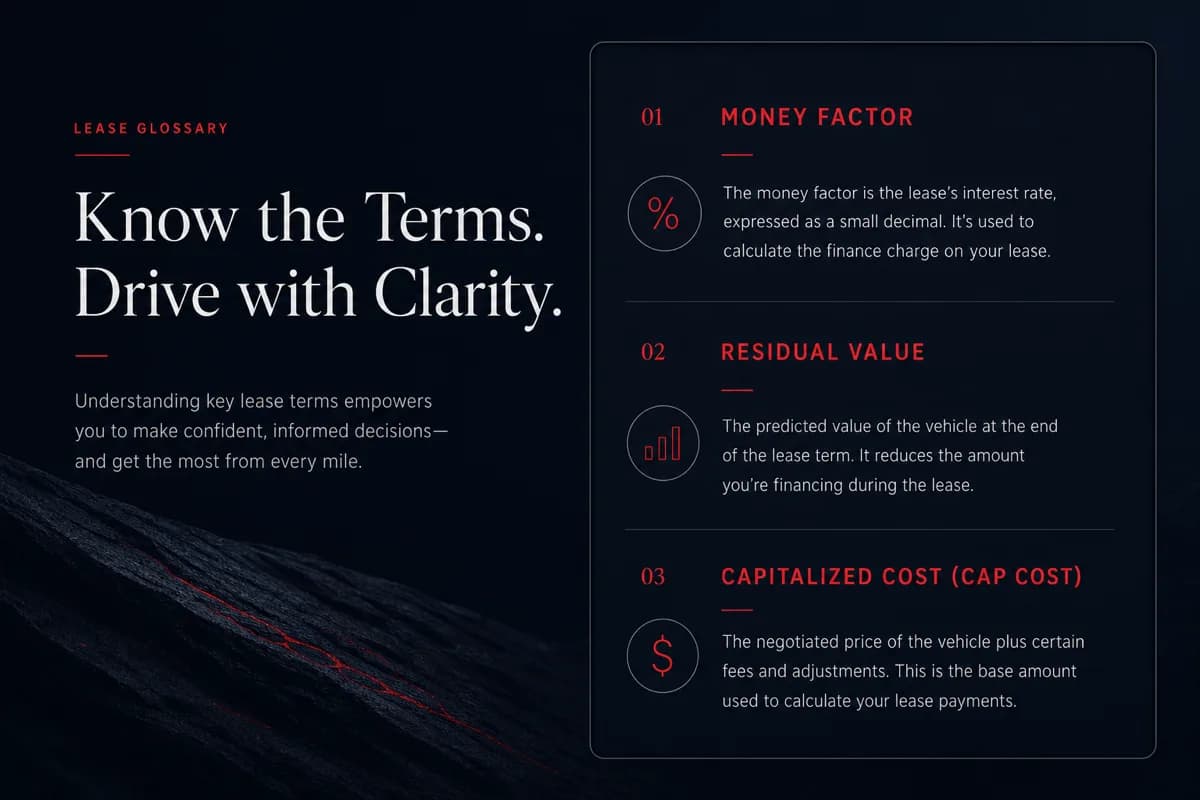
4 minCar lease glossary: key terms explained
Quick definitions of terms you will see in lease ads, quotes, and contracts—written for shoppers, not accountants.
 4 min
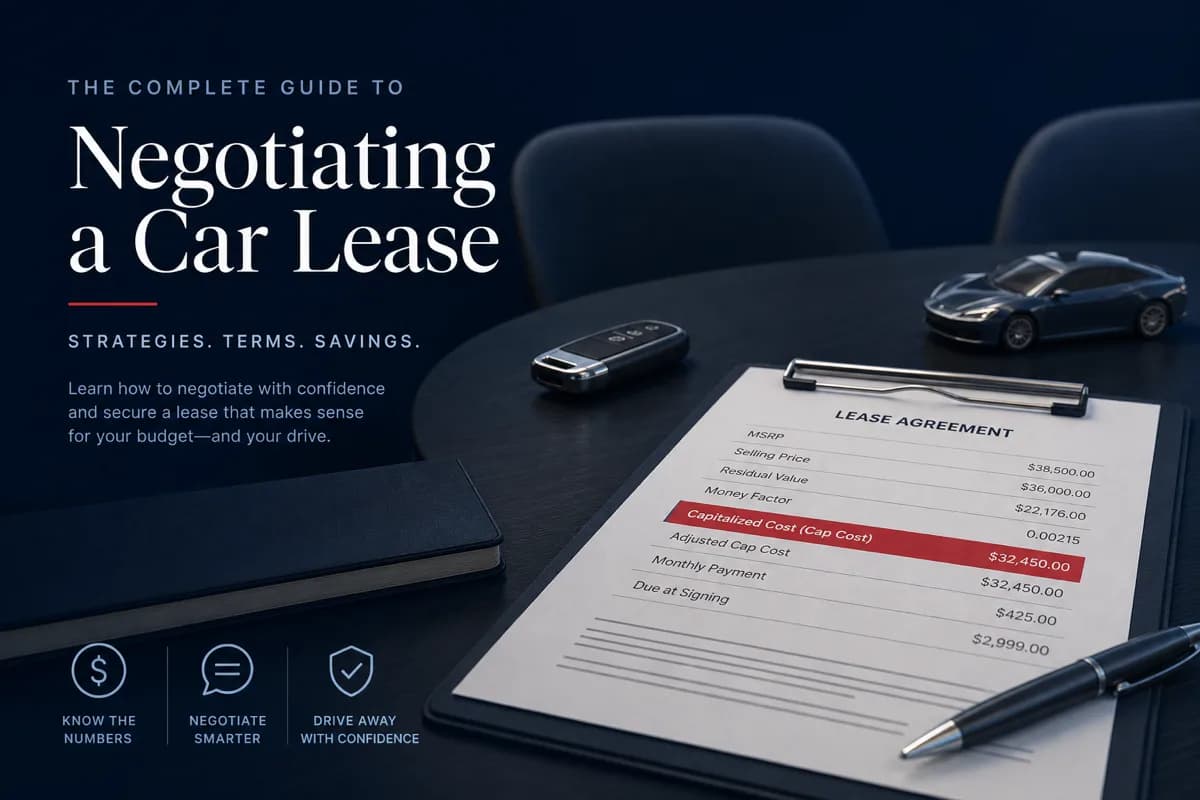
4 minHow to negotiate a car lease
What is negotiable on a lease, what is fixed by the bank, and how to use itemized quotes to improve your deal before you sign.
 5 min
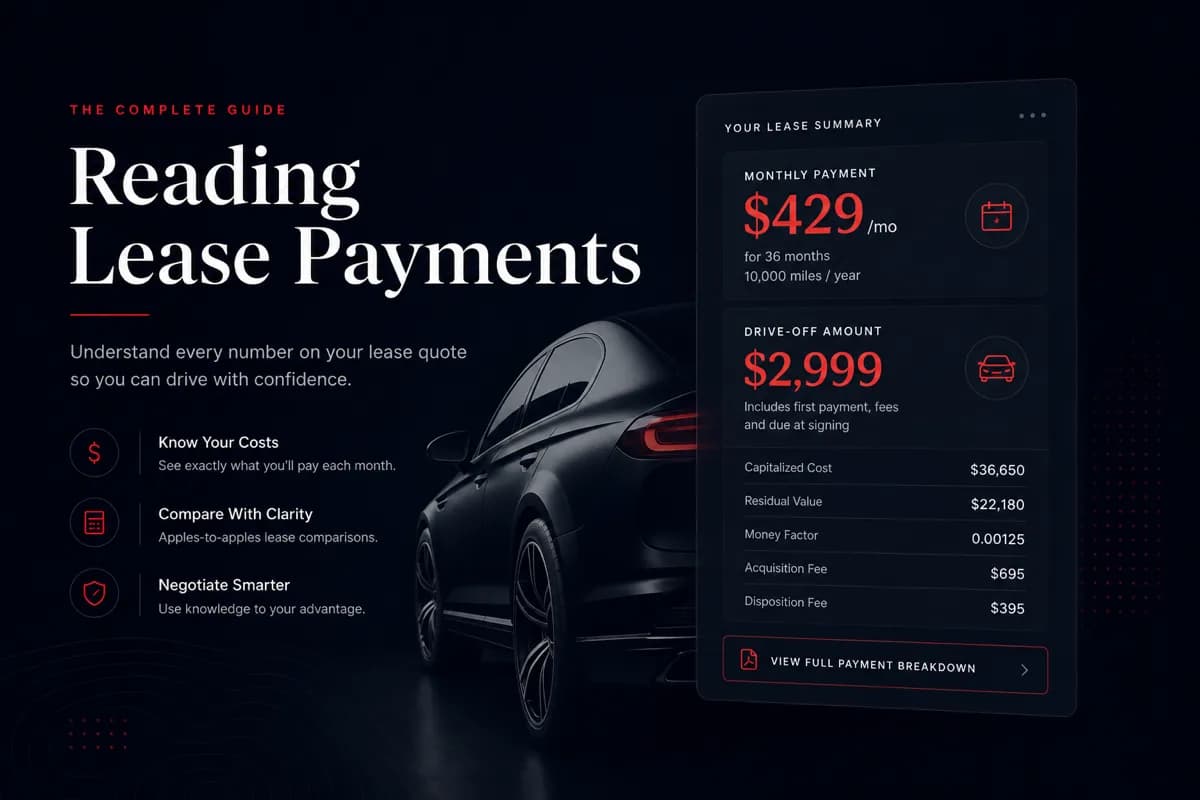
5 minWhat's due at signing on a car lease? Reading payments and drive-off
How to interpret payment, drive-off, term, and mileage when comparing lease listings online or from multiple brokers.
Ready to compare?
Compare live listings by payment, drive-off, and term, then request help on a deal when you are ready.