
Leasing with bad credit or a cosigner
Bottom-funnel guide for subprime, thin-file, and no-credit shoppers—cosigners, captives, and realistic paths to approval.
By LeaseGuru.aiUpdated 4 min read
Lease ads assume top-tier credit, but many shoppers apply with scores in the fair or subprime range—or with limited credit history. Approval is possible on some programs, but payment and required down payment change sharply versus the headline.
Cosigners, higher cap reduction, and choosing the right captive can unlock a deal when your score alone does not. Predatory offers and large upfront fees without a firm approval are the traps to avoid.
This guide covers realistic approval paths when your credit is still building or recovering—not how tiers work in general.
TLDR Quick Guide
- Subprime and thin-file approvals exist but rarely at advertised payment.
- Cosigners can improve tier if the captive allows them and they qualify.
- Higher cap reduction lowers payment-to-income ratio and approval odds.
- Some brands’ captives are more flexible than others—shop multiple quotes.
- Fix report errors and pay down utilization before applying when possible.
Realistic approval bands
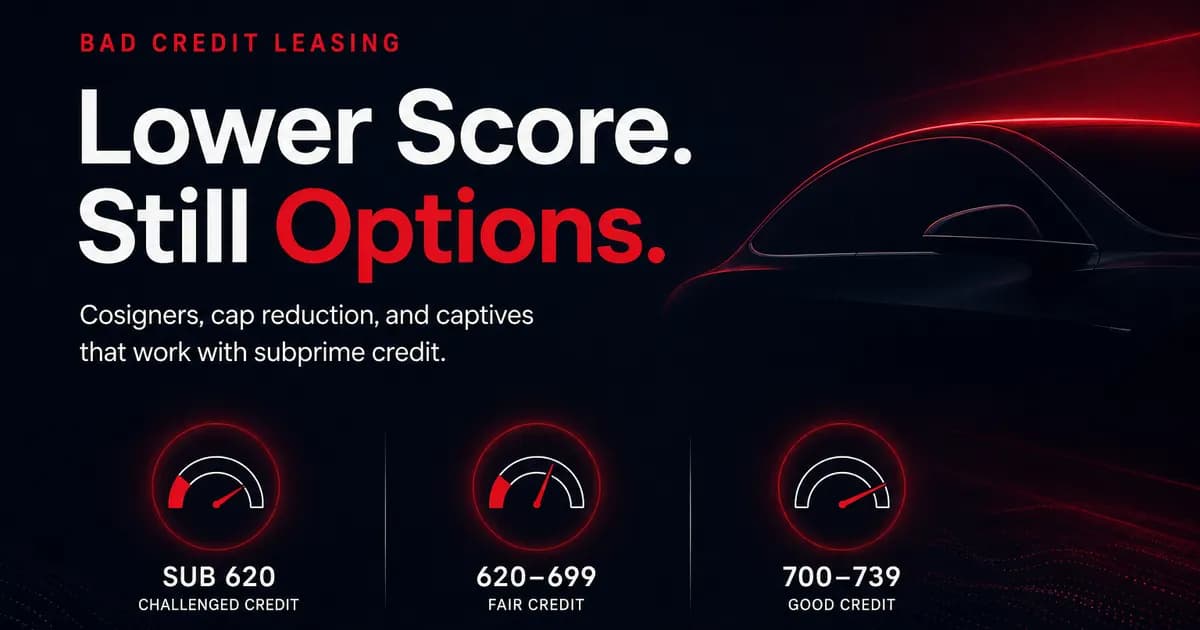
Captive lenders bucket scores into tiers that set money factor and eligible rebates. Below roughly 620–650, many mainstream lease specials are out of reach without a cosigner or significant cap reduction. No credit history is different from bad credit—thin files may need proof of income and housing stability.
Subprime vs no credit
- Subprime: active negative marks or low score—expect higher MF and fewer programs
- Thin file: little history—may qualify with strong income and low DTI
- Recent bankruptcy or repossession: long cooling-off before captives approve
Cosigner rules
A cosigner with strong credit can bump you into a better tier when the captive allows co-applicants. Both parties are typically on the contract; late payments hurt both scores. Some lenders release a cosigner only at lease end—not mid-term.
Who makes a good cosigner
- Top-tier score with low debt-to-income
- Willing to be fully liable for the full term
- Understands payment history reports to both credit files
- Not someone the dealer adds without your knowledge—review all applicants
When captives decline
If one captive declines, another brand may approve with similar payment—but avoid serial applications that hammer your score. Consider higher cap reduction, shorter term, or a lower-trim vehicle to reduce exposure.
Alternatives to explore
- Certified pre-owned lease programs where available
- Larger cap cost reduction to reduce monthly obligation
- Shorter 24-month term if offered
- Delay 60–90 days while improving utilization and fixing report errors
What to avoid
Walk away from deals requiring large non-refundable deposits before credit approval, leases through unfamiliar third-party lessors with vague contract terms, and payment quotes that refuse to show money factor and cap cost on a worksheet.
Improve your quote before applying
Pay down revolving balances to lower utilization, dispute accurate errors on your reports, and avoid new credit inquiries for 30–60 days before lease shopping. Even one tier improvement can change payment more than negotiating $500 off MSRP.
See what is leasing well right now
Live listings ranked by LeaseGuru deal score, with payment, due at signing, and term on each card.
- View deal details
 DemoScore100
2021 Porsche Taycan CPO Turbo S
- Monthly:
- $1,079/mo
- Due at signing:
- $5,499
- Term:
- 24 mo
California
- View deal details
 DemoScore96
2025 Audi A5 Premium
- Monthly:
- $239/mo
- Due at signing:
- $3,999
- Term:
- 24 mo
California
- View deal details
 DemoScore94
2026 Mercedes-Benz GLE SUV 4Matic 350
- Monthly:
- $379/mo
- Due at signing:
- $3,499
- Term:
- 24 mo
South
Key Takeaways
- Bad credit leases are possible but rarely at national-ad payment.
- Cosigners help when allowed—both parties share liability and credit impact.
- Cap reduction and shorter terms improve approval odds.
- Avoid large upfront fees without firm captive approval.
- Improve utilization and fix report errors before you apply.
Ready to see real lease offers?
Share your ZIP and we'll match you with current deals. Free, no obligation.
FAQs
Sometimes, with a cosigner or substantial cap reduction on select programs. Expect higher money factor and limited model eligibility—confirm on application, not ad copy.
No. The captive still weighs income, DTI, and lease history. A strong cosigner improves odds but is not automatic.
On-time payments report positively if the lessor reports to bureaus. Missed payments damage both you and a cosigner.
Cap reduction can improve approval and lower monthly obligation, but large down payments increase loss risk if the vehicle is totaled early—consider gap coverage.
Related guides
 3 min
3 minCredit score and car leasing
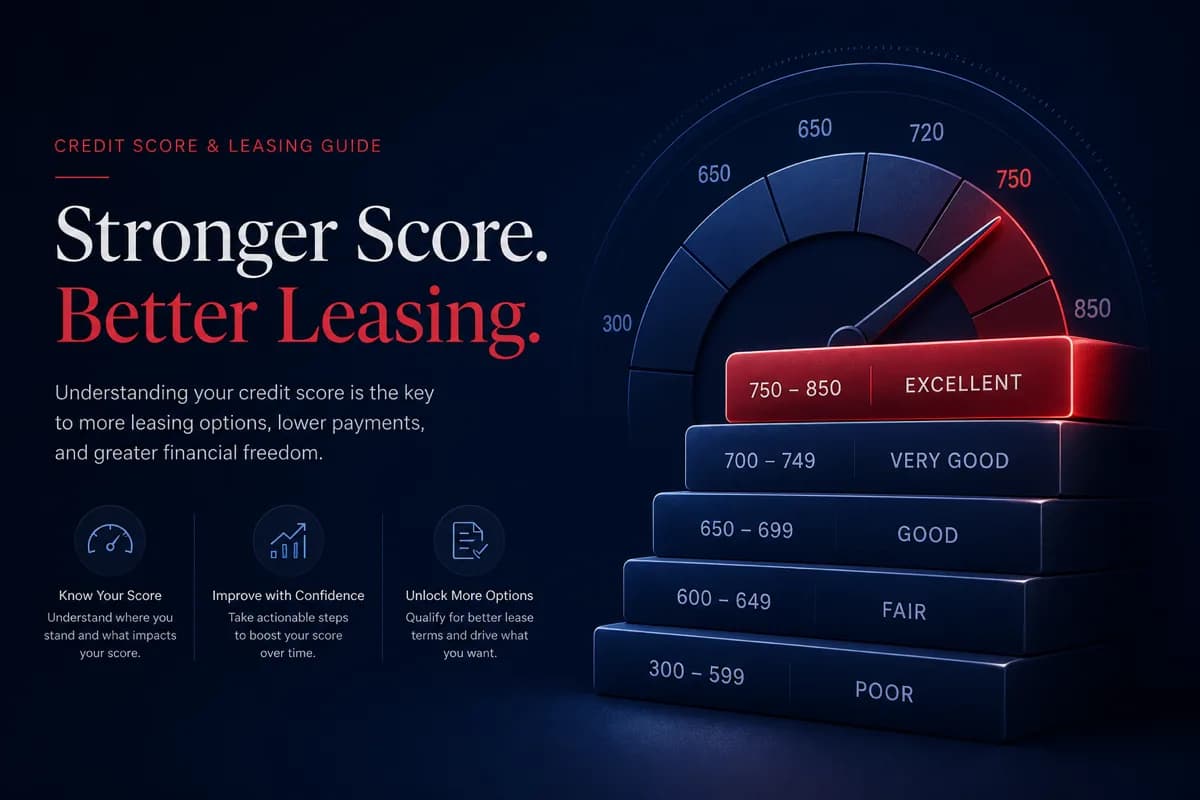
Why lease ads assume top-tier credit, how lenders tier money factor, and what to do if your score is still improving.
 4 min
4 minZero-down lease deals: what $0 down really means
Why “$0 down” and “no money down” lease deals still cost money at signing, and how to read drive-off when comparing zero-down specials.
 5 min
5 minMoney factor and APR explained
What money factor means on a lease, how to translate it to an APR-style number, and why finance charge matters when you compare listings.
Ready to compare?
Compare live listings by payment, drive-off, and term, then request help on a deal when you are ready.