

Decoding lease worksheets and broker quotes
How to read a lease worksheet or broker quote line by line so payment, drive-off, and program details actually match before you sign.
By LeaseGuru.aiUpdated 4 min read
Broker ads show monthly payment. The lease worksheet behind that number tells the real story—selling price, incentives, residual, money factor, mileage tier, and everything bundled into drive-off.
Two quotes with the same payment can reflect different economics. Learning to read the worksheet is how you compare offers fairly and catch missing disclosures before you visit a dealer.
This guide walks through the standard lines on a lease worksheet and the red flags to watch for when comparing quotes on LeaseGuru or from multiple sources.
TLDR Quick Guide
Worksheet essentials:
- MSRP and selling price flow into cap cost—the amount actually being leased.
- Residual and money factor are lender-set; verify both appear on every quote.
- Rebates and cap reductions lower cap cost; fees rolled in raise it.
- Drive-off is separate from cap reduction—itemize taxes, fees, and first payment.
- Never sign without MF, residual, term, miles, and cap cost on the sheet.
Anatomy of a lease worksheet
Most worksheets list vehicle MSRP, negotiated selling price, incentives, capitalized cost adjustments, residual value (percent and dollars), money factor, term, annual mileage, monthly payment, and amount due at signing. Missing any of those fields makes apples-to-apples comparison impossible.
Top of the sheet: vehicle and program
Confirm year, make, model, trim, and VIN if available. Check that term months and mileage tier match what the ad promised—36 months at 12,000 miles per year is not the same as 39 months at 10,000.
Middle: the math lines
Cap cost, residual, and money factor drive payment. If a broker only emails payment and drive-off, reply asking for the full worksheet before you schedule a visit.
Cap cost vs selling price
Selling price is what you negotiate off MSRP. Cap cost is selling price plus fees you capitalize minus rebates and cap cost reduction. Every dollar of unnecessary fee rolled into cap cost raises your payment for the full term.
Common cap cost add-ons
- Acquisition or bank fee (sometimes paid upfront instead)
- Dealer doc or admin fee
- Protection products you did not request
- Negative equity from a trade rolled into the lease
Where rebates and incentives appear
Manufacturer lease cash, loyalty, and conquest rebates usually show as cap cost reductions or separate incentive lines. Subvented money factor or residual may not appear as a dollar rebate but still lower payment—compare program notes on the sheet.
Stacking and eligibility
Not every rebate stacks with every program. College, military, and loyalty offers often require proof and specific captive programs. If a quote assumes incentives you do not qualify for, payment will change at signing.
Reading the drive-off block
Due at signing typically includes first payment, taxes, registration, acquisition fee (if not capitalized), doc fees, and any cap cost reduction. Use our drive-off decoder to sanity-check each line against what the broker quoted.
Red flags on incomplete quotes
- Payment quoted without residual or money factor
- Term or mileage different from the listing you clicked
- Drive-off missing while payment looks unusually low
- MF marked up with no buy rate disclosed
- Rebates listed that require finance captive you did not choose
Before you sign
Run the deal checklist, compare total cost across sources, and confirm final numbers on the contract match the worksheet. LeaseGuru listings are a starting point—the signing sheet is the binding document.
See what is leasing well right now
Live listings ranked by LeaseGuru deal score, with payment, due at signing, and term on each card.
- View deal details
 DemoScore100
2021 Porsche Taycan CPO Turbo S
- Monthly:
- $1,079/mo
- Due at signing:
- $5,499
- Term:
- 24 mo
California
- View deal details
 DemoScore96
2025 Audi A5 Premium
- Monthly:
- $239/mo
- Due at signing:
- $3,999
- Term:
- 24 mo
California
- View deal details
 DemoScore94
2026 Mercedes-Benz GLE SUV 4Matic 350
- Monthly:
- $379/mo
- Due at signing:
- $3,499
- Term:
- 24 mo
South
Key Takeaways
- A complete worksheet shows MSRP, cap cost, residual, MF, term, miles, payment, and drive-off.
- Cap cost—not just selling price—drives depreciation and payment.
- Rebates and subvention lower cap cost or finance charge; verify eligibility.
- Itemize drive-off; use tools to decode fees before signing.
- Request the full sheet from every broker before you commit.
Ready to see real lease offers?
Share your ZIP and we'll match you with current deals. Free, no obligation.
FAQs
Some send payment-only quotes to start the conversation. Insist on residual, money factor, and cap cost before visiting. Incomplete quotes are a reason to compare another source.
Cap cost is the leased amount over the term. Due at signing is cash you pay on day one—often including first payment, taxes, fees, and cap reduction. They are related but not the same number.
Use it to compare structure across quotes, then verify every line on the contract at signing. Typos, wrong trim, and expired incentives happen—catch them before you drive off.
Listings show payment, drive-off, term, and mileage from partner feeds when available. Use worksheets from brokers to validate listing fields and compare total cost side by side.
Related guides
 5 min
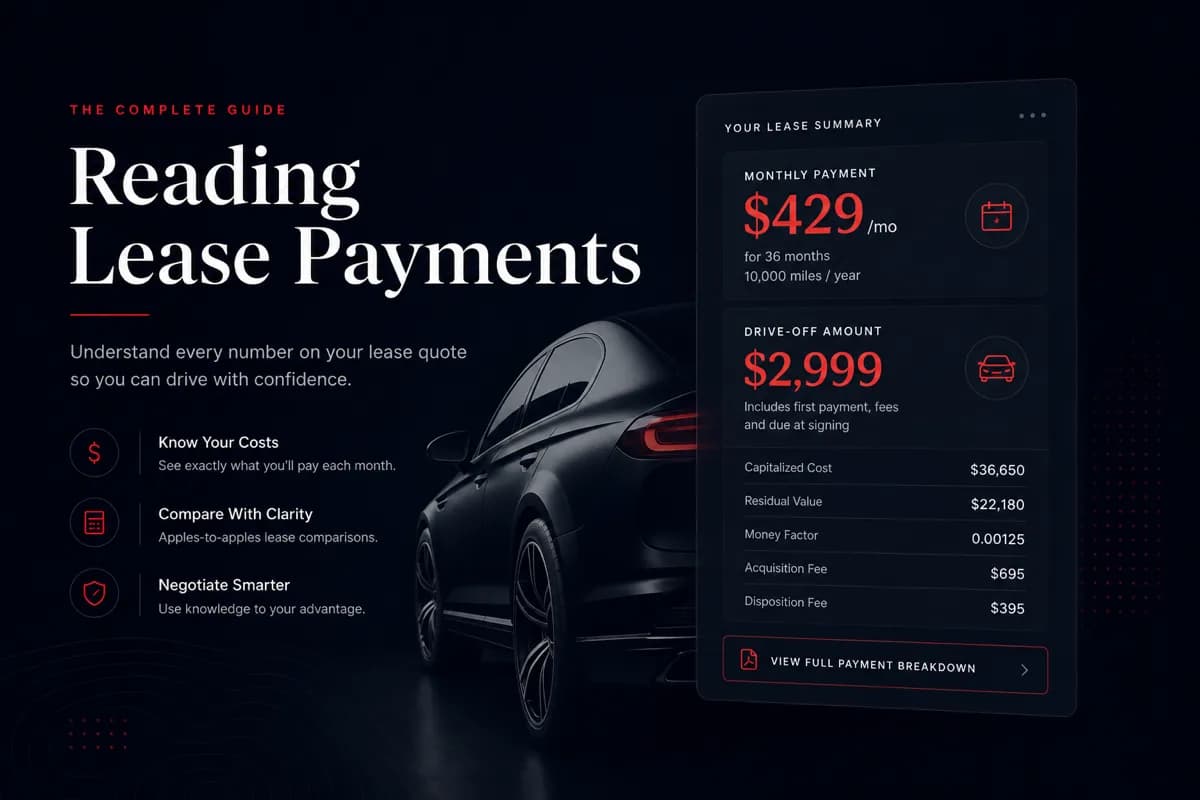
5 minWhat's due at signing on a car lease? Reading payments and drive-off
How to interpret payment, drive-off, term, and mileage when comparing lease listings online or from multiple brokers.
 4 min
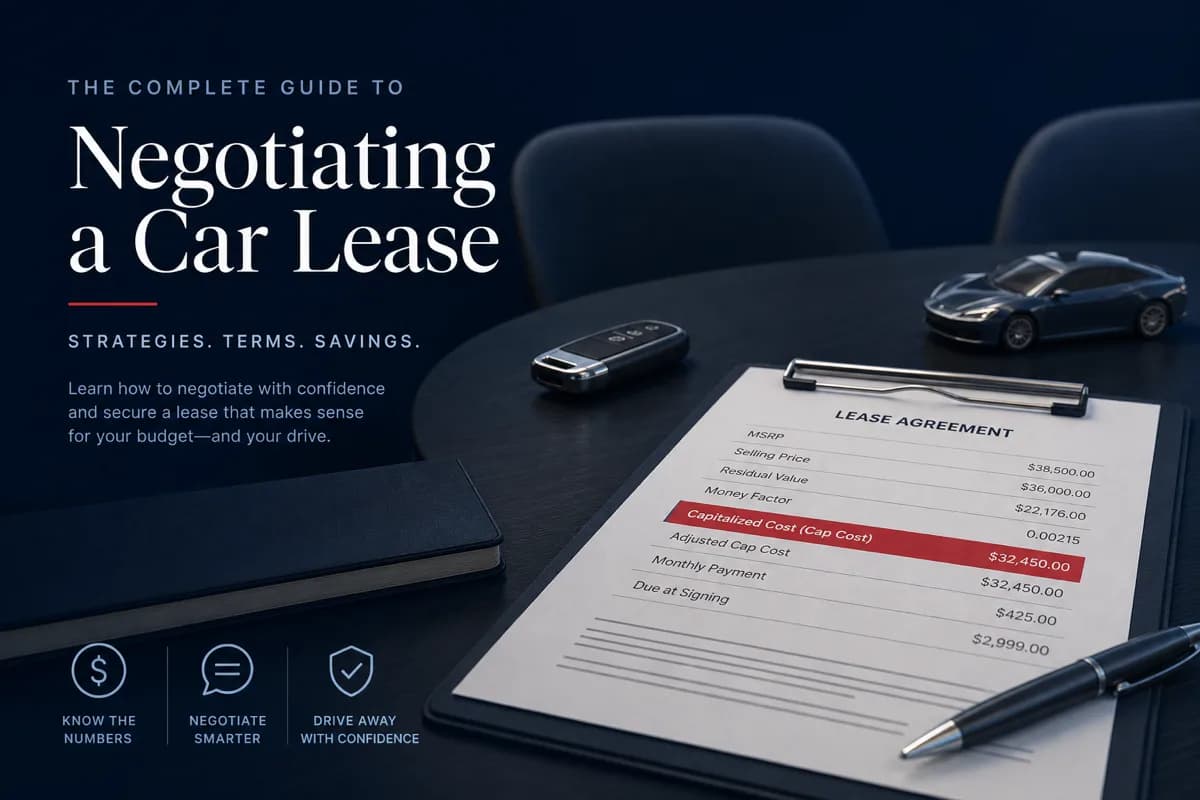
4 minHow to negotiate a car lease
What is negotiable on a lease, what is fixed by the bank, and how to use itemized quotes to improve your deal before you sign.
 5 min
5 minMoney factor and APR explained
What money factor means on a lease, how to translate it to an APR-style number, and why finance charge matters when you compare listings.
Ready to compare?
Compare live listings by payment, drive-off, and term, then request help on a deal when you are ready.