

Business car leasing: how it works and how to compare deals
Who can lease a car through a business, what lenders ask for, how the structure and tax treatment differ from a personal lease, and how to compare offers.
By LeaseGuru.aiUpdated 8 min read
A business car lease uses the same building blocks as a personal lease: capitalized cost, residual value, money factor, term, and mileage. What changes is who signs, what the lender asks for, and how the payment may be treated at tax time.
Most advertised lease specials are written for individual consumers. A business applicant can still lease the same vehicle, but the lender, the paperwork, and sometimes the program rules differ, so the payment you see in an ad is a starting point rather than a promise.
This guide covers who qualifies, what to expect in underwriting, the tax topics worth raising with a professional, and how to compare business quotes line for line. It is general information, not tax or legal advice.
TLDR Quick Guide
A business lease is the same math with a different applicant, different paperwork, and a different tax conversation.
- Sole proprietors, LLCs, partnerships, and corporations can all lease; requirements vary by lender.
- Expect a personal guarantee, especially for a young or small business.
- Advertised consumer specials may not apply to a business lessee. Ask which program the quote uses.
- Tax treatment (Section 179, mileage versus actual expenses) depends on your facts. Talk to a tax professional.
- Compare itemized quotes on cap cost, money factor, residual, miles, and drive-off, same as any lease.
Personal lease vs business lease
The vehicle, the term, and the monthly payment formula are the same. The differences are in the contract and the application: the lessee on a business lease is the business entity (or the owner operating as a sole proprietor), and the lender underwrites accordingly.
| Topic | Personal lease | Business lease |
|---|---|---|
| Lessee | You as an individual | The business, or you as a sole proprietor |
| Underwriting | Personal credit and income | Personal credit, and often business documents |
| Guarantee | Usually not required | Owner personal guarantee is common |
| Advertised specials | Written for consumers | May not apply; ask which program |
| Tax treatment | Generally not deductible | May be deductible in whole or part; ask a professional |
| Vehicle use | Personal driving | Business use, often with a business-use share |
Who qualifies
Lenders generally accept several business structures. The details vary by lender and program, so treat this as what to expect rather than a rule.
- Sole proprietors and freelancers: often leased in the owner's name or under a business name, with the owner's personal credit driving approval.
- LLCs and partnerships: the entity signs, and owners frequently sign a personal guarantee.
- Corporations: the corporation signs; newer or smaller ones usually still need a guarantee from an officer or owner.
A business with little operating history is usually underwritten on the owner's personal credit. Older businesses with their own credit file and financial statements may qualify without leaning on the owner as heavily.
Credit and paperwork
Plan on a credit application plus proof that the business exists and the applicant can sign for it. Commonly requested items include the business name and tax ID, formation documents or a business license, proof of address, and sometimes recent bank statements or tax returns. Ask the dealer or lender for their exact list before you apply so you do not trigger multiple credit pulls.
Personal guarantee
A personal guarantee makes the owner personally responsible for the lease if the business does not pay. That can reach early termination charges, wear and mileage charges, and the unpaid balance. Read what is guaranteed and for how long before signing, and understand that a guarantee can weaken the liability protection an LLC or corporation is meant to provide. A lawyer can explain how it applies to you.
How payment and tax treatment can differ
Monthly payment is still driven by depreciation (cap cost minus residual), the rent charge from the money factor, and taxes and fees. Some business leases are structured differently from consumer leases, for example with different tax handling by state or different fee schedules, so ask for the itemized worksheet rather than comparing payments alone.
Tax treatment is where business leasing diverges most, and it depends on your entity, how much you drive for business, the vehicle, and current law. The points below describe what the topics are, not what you should do.
Mileage method vs actual expenses
In the United States, business use of a vehicle is generally tracked one of two ways: a standard mileage rate set by the IRS, or actual expenses such as lease payments, fuel, insurance, and maintenance. For a leased vehicle, choosing the standard mileage rate generally commits you to it for the whole lease term, including renewals, while actual expenses are generally not locked in that way. That is one reason to decide before the first payment rather than after. A tax professional can tell you which fits your situation.
Section 179 and leased vehicles
Section 179 is a provision that lets a business deduct certain equipment purchases in the year they are placed in service rather than over time. It is most associated with buying a vehicle, and annual limits and vehicle-weight rules change. Lease payments are generally treated under different rules than a purchase deduction, and higher-priced vehicles can carry limits on the deductible lease amount. We do not state current dollar limits here because they change; check the current IRS guidance or ask a tax professional.
State sales tax on business leases
Lease sales tax rules vary by state and can differ for business lessees. Use the state tax tool and confirm with the lender how tax is charged on the monthly payment.
Insurance and mileage
Lessors require specific coverage, and a vehicle titled to a business is usually insured under a commercial or business auto policy rather than a personal one. Confirm that the policy meets the lender's liability limits and deductible caps, and that business use is covered. Ask whether gap coverage is included in the lease or must be added.
Mileage deserves a hard look because business driving adds up. Estimate real annual miles from past driving, then compare plan sizes. Overage is charged per mile at lease end, and it is usually cheaper to buy miles upfront than to pay overage later.
How to compare business lease offers
The comparison method is the same as for a personal lease. Get each offer itemized, confirm it is for a business lessee, and line the numbers up on the same term and mileage.
- Ask each source for cap cost, residual, money factor, term, annual miles, and total due at signing.
- Confirm whether rebates and specials in the ad apply to a business lessee.
- Convert each quote to an effective monthly cost including drive-off.
- Ask about any guarantee, security deposit, and early termination terms.
- Run the total-cost view if you are weighing lease against buying.
See what is leasing well right now
Live listings ranked by LeaseGuru deal score, with payment, due at signing, and term on each card.
- View deal details
 DemoScore100
2021 Porsche Taycan CPO Turbo S
- Monthly:
- $1,079/mo
- Due at signing:
- $5,499
- Term:
- 24 mo
California
- View deal details
 DemoScore96
2025 Audi A5 Premium
- Monthly:
- $239/mo
- Due at signing:
- $3,999
- Term:
- 24 mo
California
- View deal details
 DemoScore94
2026 Mercedes-Benz GLE SUV 4Matic 350
- Monthly:
- $379/mo
- Due at signing:
- $3,499
- Term:
- 24 mo
South
Key Takeaways
- A business lease uses the same lease math; the applicant, paperwork, and tax conversation differ.
- Expect underwriting on business documents and, often, a personal guarantee from the owner.
- Do not assume a consumer special applies to a business lessee. Ask which program the quote uses.
- Tax treatment depends on your facts and current law. Consult a tax professional before choosing a method.
- Compare itemized quotes on the same term, miles, and drive-off before committing.
Ready to see real lease offers?
Share your ZIP and we'll match you with current deals. Free, no obligation.
FAQs
Often yes. Many lenders will lease to a sole proprietor, sometimes in the owner's name and sometimes under a business name, with approval driven by the owner's personal credit. Requirements vary by lender.
Not necessarily. Some lenders lease to sole proprietors, while others want a registered entity. A registered entity does not remove the need for a personal guarantee at many lenders, so ask what each lender requires.
It is common, particularly for a newer or smaller business. A guarantee makes you personally liable if the business defaults. Read what it covers and ask a lawyer if you are unsure how it applies.
Possibly, in whole or in part, depending on business use, your entity, the vehicle, and current rules. Lease payments, the standard mileage rate, and Section 179 each have conditions. We cannot give tax advice; talk to a tax professional.
Not always. Many specials are written for individual consumers and may exclude commercial lessees. Ask the dealer or broker in writing whether the advertised rebate, money factor, and payment apply to a business application.
It depends on your mileage, how long you keep vehicles, cash flow, and tax situation. Leasing usually means a lower payment and no resale risk but mileage limits and no equity. The total-cost tool lets you compare both on your numbers.
Base it on actual annual driving, not the standard plan. Business use often runs higher than personal use, and overage is charged per mile at lease end, so buying extra miles upfront is usually cheaper than paying overage.
Related guides
 4 min
Lease vs. buy: which is right for you?
A practical framework for choosing between leasing and financing based on how you drive, how long you keep cars, and what you want to optimize for.
 3 min
Credit score and car leasing
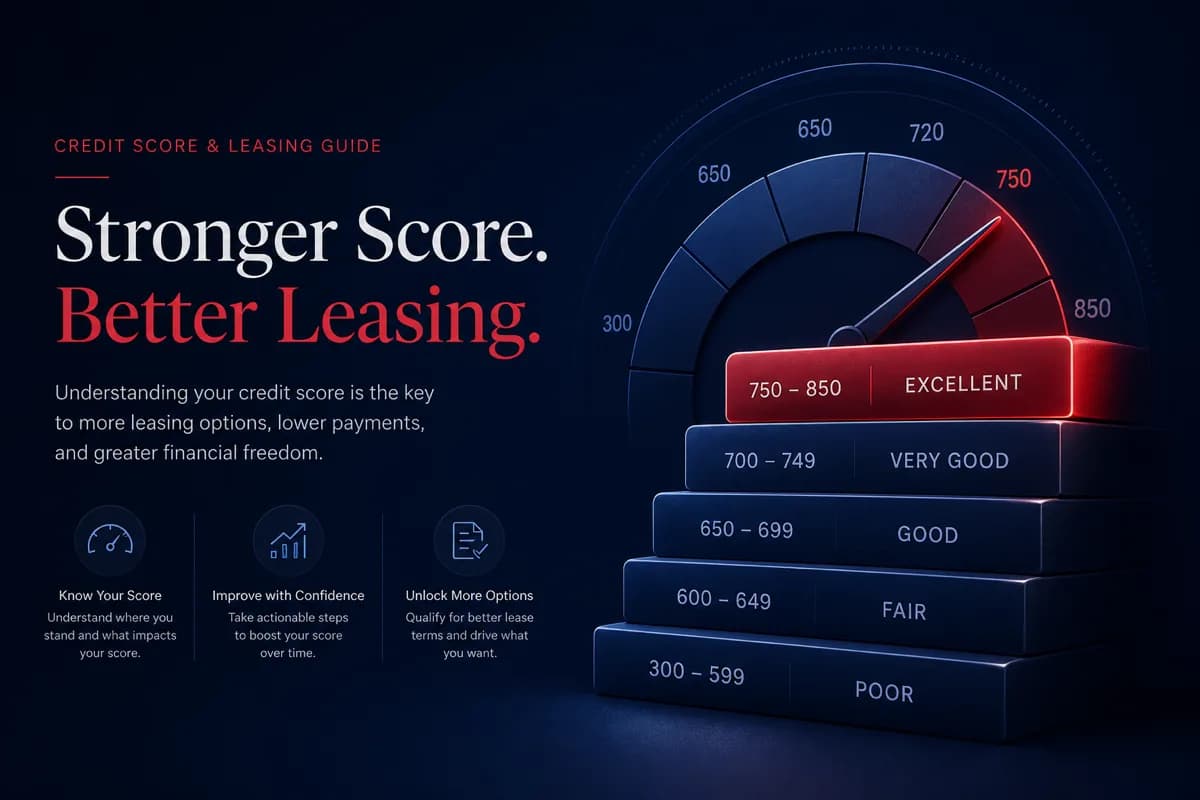
Why lease ads assume top-tier credit, how lenders tier money factor, and what to do if your score is still improving.
 3 min
Comparing lease offers across brokers and dealers
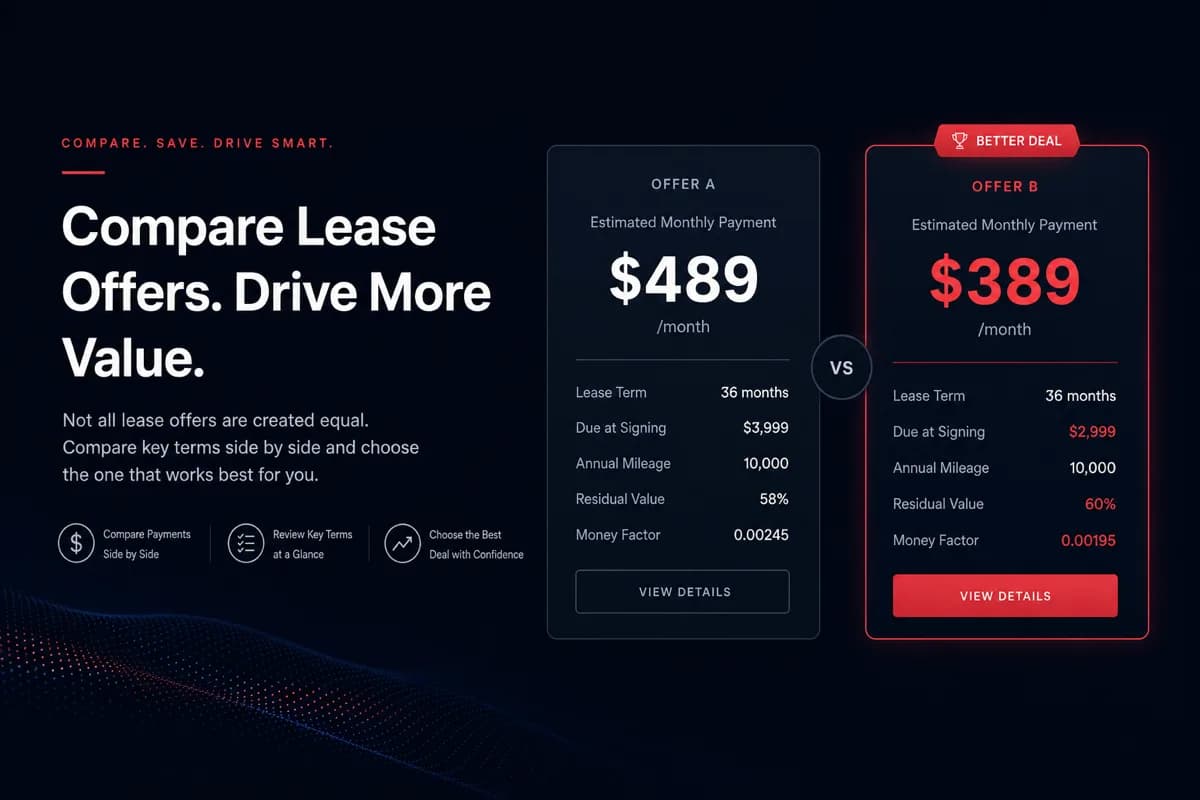
How to compare specials from different companies side by side when every site formats payment data differently.
Ready to compare?
Compare live listings by payment, drive-off, and term, then request help on a deal when you are ready.