
Short-term car leases: 6, 12, and 24 month options
Why a 12-month car lease is hard to find, which short-term routes exist (transfers, subscriptions, early exit, pull-ahead), and when a 24-month lease is the practical choice.
By LeaseGuru.aiUpdated 6 min read
Searches for a 12-month car lease are common, but advertised new-car lease deals from manufacturer finance arms rarely run that short. Most of the leases we see are priced around 24, 36, or 39 months.
That does not leave you without options. You can take over someone else's lease with a few months left, use a subscription or rental, leave a longer lease early, or use a pull-ahead program. Each has a different cost profile.
This guide explains why short terms are scarce, what the real alternatives are, and how to compare them with the same math you would use on any lease.
TLDR Quick Guide
A true new 12-month lease is rare. These are the routes that actually work.
- Most advertised new-car leases are 24 months or longer; advertised offers are most often 24, 36 or 39 months.
- Short lease terms spread the same upfront costs and the steepest depreciation over fewer months, so the cost per month is higher.
- A lease takeover or transfer can give you roughly 6 to 12 months remaining on a car that was originally leased for longer.
- Subscriptions and rentals are priced as services, not leases, and usually cost more per month in exchange for flexibility.
- If you need the car for 24 months, a 24-month lease is the cleanest option. Compare it by effective monthly cost, not payment alone.
Why very short leases are uncommon
A lease payment is mostly depreciation plus a finance charge. New cars lose the largest share of their value in the first year or two, so a very short lease puts that steepest drop on a small number of payments. The lessor also has to cover its fixed costs, such as the acquisition fee and the disposition and remarketing work at the end, over fewer months.
Manufacturer programs are also built around set terms. Advertised offers are most often 24, 36 or 39 months, and some brands offer a wider range, so the shortest available term varies by program. Terms differ by brand, model, and month, so check the actual offer sheet rather than assuming a short term exists.
Short-term options that actually exist
If you need a car for a year or less, these are the paths worth checking. Availability depends on the lessor and the market, so treat each as something to verify, not a guarantee.
Lease takeover or transfer
Someone else's lease with roughly 6 to 12 months left can be assumed if the lessor allows it and you pass credit approval. This is often the closest thing to a real 6 or 12 month lease. Transfer fees, remaining mileage, and the lessor's rules decide whether it works, and some lessors set a minimum number of months that must remain (GM Financial requires at least 6), so a very short remainder may not qualify.
Leave a longer lease early
You can sign a 24 or 36 month lease and exit before maturity, but the contract usually makes you responsible for the remaining payments or a payoff shortfall. That can cost far more than a lease that simply ends on schedule.
Pull-ahead programs
Some manufacturers waive remaining payments when you lease or buy another car from the same brand. That helps you leave an existing lease early, not start a new short one, and the offers are promotional and time-limited.
Subscriptions and rentals
Car subscription services and long-term rentals sell month-to-month or short-term access and may bundle insurance or maintenance. They are not leases and are not listed on this site, so read the fee schedule closely. Expect to pay for the flexibility.
What short terms cost
Two things push the cost per month up when the term gets shorter. First, depreciation is front-loaded, so the early months carry more of it. Second, fixed charges like the acquisition fee and any money due at signing are divided by fewer months.
A simple illustration, not a quote: a $600 acquisition fee adds $25 a month over 24 months, $50 a month over 12, and $100 a month over 6, before anything else. Add a down payment and the gap widens. This is why the headline payment can look reasonable while the effective monthly cost is not.
When a 24-month lease makes sense
- You need a car for about two years, such as a job assignment or a planned move.
- You want a new car every two years and the brand offers a 24-month term.
- Your timeline is uncertain and a shorter commitment lowers the cost of leaving early.
- You can keep mileage within the allowance, since a shorter term does not loosen the mileage rules.
If you need less than a year, a transfer or a rental is usually closer to what you want than a new lease with an early exit.
How to compare short-term options
Payments across different terms are not comparable on their own. Add everything you pay over the full term, including due at signing and fees, then divide by the months you will actually keep the car. That is the effective monthly cost.
See what is leasing well right now
Live listings ranked by LeaseGuru deal score, with payment, due at signing, and term on each card.
- View deal details
 DemoScore100
2021 Porsche Taycan CPO Turbo S
- Monthly:
- $1,079/mo
- Due at signing:
- $5,499
- Term:
- 24 mo
California
- View deal details
 DemoScore96
2025 Audi A5 Premium
- Monthly:
- $239/mo
- Due at signing:
- $3,999
- Term:
- 24 mo
California
- View deal details
 DemoScore94
2026 Mercedes-Benz GLE SUV 4Matic 350
- Monthly:
- $379/mo
- Due at signing:
- $3,499
- Term:
- 24 mo
South
Key Takeaways
- A new 12-month lease from a manufacturer finance arm is rare; advertised terms are most often 24 months or longer.
- Shorter terms cost more per month because depreciation and fees land on fewer payments.
- Lease takeovers are often the closest real option for roughly 6 to 12 months.
- Early exit from a longer lease can cost far more than the term you saved.
- Compare options by effective monthly cost over the months you will keep the car.
Ready to see real lease offers?
Share your ZIP and we'll match you with current deals. Free, no obligation.
FAQs
Rarely as a new lease. Most advertised lease terms are 24 months or longer. The practical routes are taking over an existing lease with about a year left, or using a subscription or rental.
Standard new-car leases do not run 6 months. A lease takeover needs 6 or more months remaining if the lessor allows it (GM Financial requires at least 6), so a rental or subscription is the other usual way to get that length.
Often, because depreciation and fees spread over fewer payments. Not always: a subsidized 24-month program can beat a 36-month one. Compare effective monthly cost on the actual offers.
You can try, but the contract normally makes you pay the remaining payments or the payoff shortfall. A transfer, if the lessor allows it, can limit that cost.
No. A subscription is a service with its own pricing and terms, often month to month. It is not a lease contract, so the residual, money factor, and acquisition fee math does not apply the same way.
Total everything you pay, including due at signing and fees, then divide by the months you will have the car. The effective monthly and total cost tools do this for you.
Related guides
 4 min
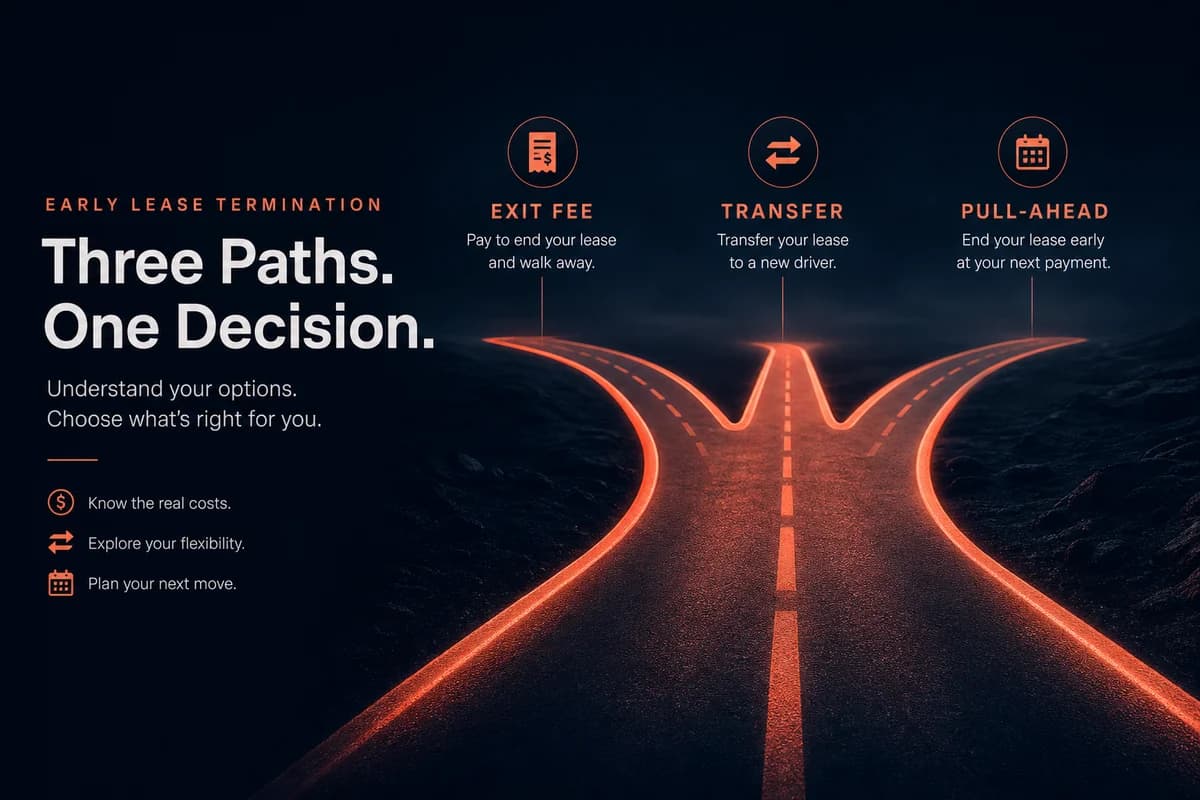
Early lease termination and transfers
How early lease termination works, transfer and swap options, pull-ahead programs, and when buyout beats paying exit fees.
 5 min
Lease transfer and assumption policy by brand
Which captives publish a transfer or assumption program, the fee, and who remains liable — sourced from lender pages only.
 10 min
Lease pull-ahead programs
Manufacturer pull-ahead programs that waive remaining payments when you lease or buy the same brand—and how they differ from early termination.
Ready to compare?
Compare live listings by payment, drive-off, and term, then request help on a deal when you are ready.