
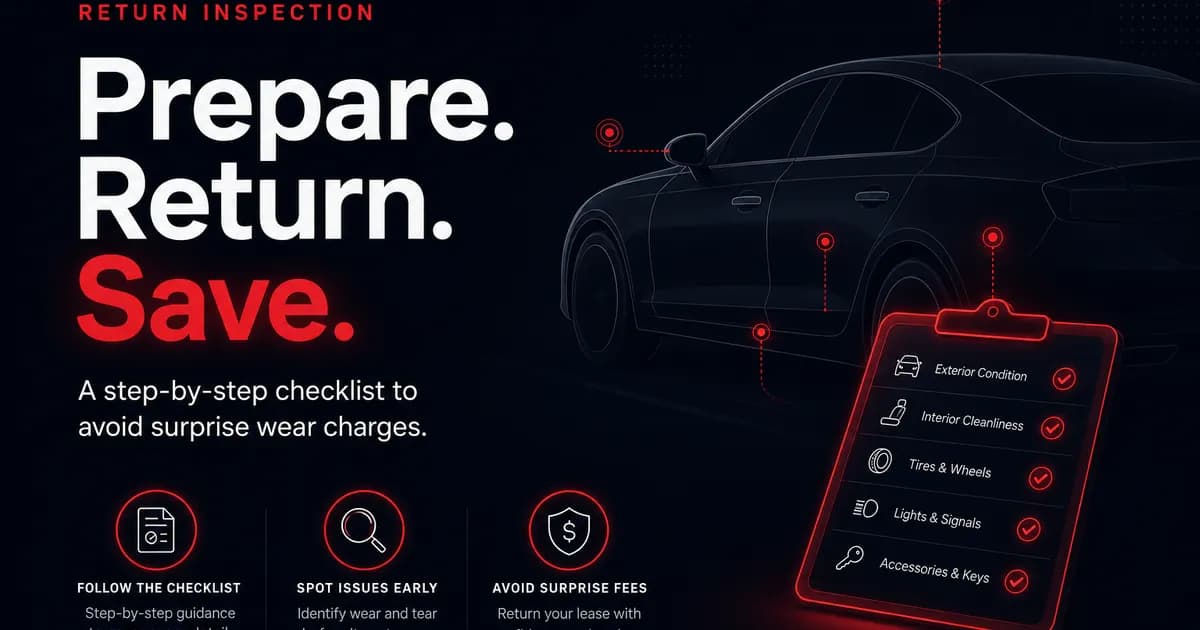
Lease-end inspection checklist
Actionable timeline and checklists to prepare for pre-return inspection and avoid surprise wear charges.
By LeaseGuru.aiUpdated 3 min read
Wear and tear charges hit at return—not when damage happens. A pre-return inspection shows what you would be billed, but only if you prepare the vehicle and documents ahead of time.
This guide is a practical checklist distinct from understanding charge rules. Use it 90 days before maturity to fix affordable items and document condition.
Pair this checklist with your captive’s published wear standards and our wear-and-tear guide for what fees mean.
TLDR Quick Guide
- Start prep 90 days before lease end—do not wait until the final week.
- Many captives offer a free pre-return inspection 60–90 days out.
- Fix items cheaper than estimated wear fees when practical.
- Document start-of-lease condition if you have baseline photos.
- Separate wear charges from mileage overage and disposition fees.
Timeline: 90, 60, and 30 days out
- 90 days: Schedule pre-return inspection; compare tire tread and mileage trend
- 60 days: Repair curb rash, glass chips, and interior stains below fee thresholds
- 30 days: Final wash, vacuum, remove personal items; gather keys and manuals
- 7 days: Confirm return appointment and odometer reading for mileage projection
Pre-return inspection
Many captives provide a complimentary inspection with estimated charges. Use it as a to-do list—not a final bill—so you can fix items affordably before the official return odometer reading.
Exterior checklist
- Tires: tread depth even across sets; match brand requirements if specified
- Wheels: curb rash depth within published limits; no bent rims
- Glass: repair chips before they crack; replace windshield if in driver sightline
- Body: measure dents and scratches against lessor size thresholds
- Bumpers and trim: secure loose pieces; replace missing moldings
- Lights: all bulbs working; lenses not cracked
Interior checklist
- Seats: rips, burns, and stains beyond normal wear
- Carpets and mats: return original mats or OEM replacements
- Odors: smoke, pet, and mildew may trigger cleaning charges
- Electronics: infotainment, cameras, and sensors functioning
- Keys and fobs: return all sets listed on contract
- Owner’s manual and charging cables where applicable
Documentation checklist
- Start-of-lease walk-around photos if you took them
- Maintenance records for required services
- Pre-return inspection report from captive
- Repair receipts for items you fixed before return
- Odometer photos near maturity for mileage disputes
If you lack start photos
You can still benefit from pre-return inspection and proactive repairs. Document everything you fix with dated receipts before the final return appointment.
After pre-return inspection
Compare estimated wear fees to local repair quotes. A $150 wheel refinish beats a $400 charge; a $900 bumper blend may not beat the lessor fee. Mileage overage and disposition fees are separate line items.
See what is leasing well right now
Live listings ranked by LeaseGuru deal score, with payment, due at signing, and term on each card.
- View deal details
 DemoScore100
2021 Porsche Taycan CPO Turbo S
- Monthly:
- $1,079/mo
- Due at signing:
- $5,499
- Term:
- 24 mo
California
- View deal details
 DemoScore96
2025 Audi A5 Premium
- Monthly:
- $239/mo
- Due at signing:
- $3,999
- Term:
- 24 mo
California
- View deal details
 DemoScore94
2026 Mercedes-Benz GLE SUV 4Matic 350
- Monthly:
- $379/mo
- Due at signing:
- $3,499
- Term:
- 24 mo
South
Key Takeaways
- Begin inspection prep 90 days before maturity.
- Use free pre-return inspections as a repair to-do list.
- Fix affordable exterior and interior items before final return.
- Keep maintenance records and repair receipts organized.
- Wear fees are separate from mileage and disposition charges.
Ready to see real lease offers?
Share your ZIP and we'll match you with current deals. Free, no obligation.
FAQs
Usually optional but strongly recommended. It estimates charges before your final odometer reading locks in mileage fees.
Yes, before final return. Keep receipts showing repairs completed before the official return date.
Normal cleanliness is expected. Excessive dirt or odors can trigger cleaning fees—wash and vacuum before return.
Dispute in writing with photos and repair quotes promptly after final inspection. Success is easier when you documented condition early.
Related guides
 9 min
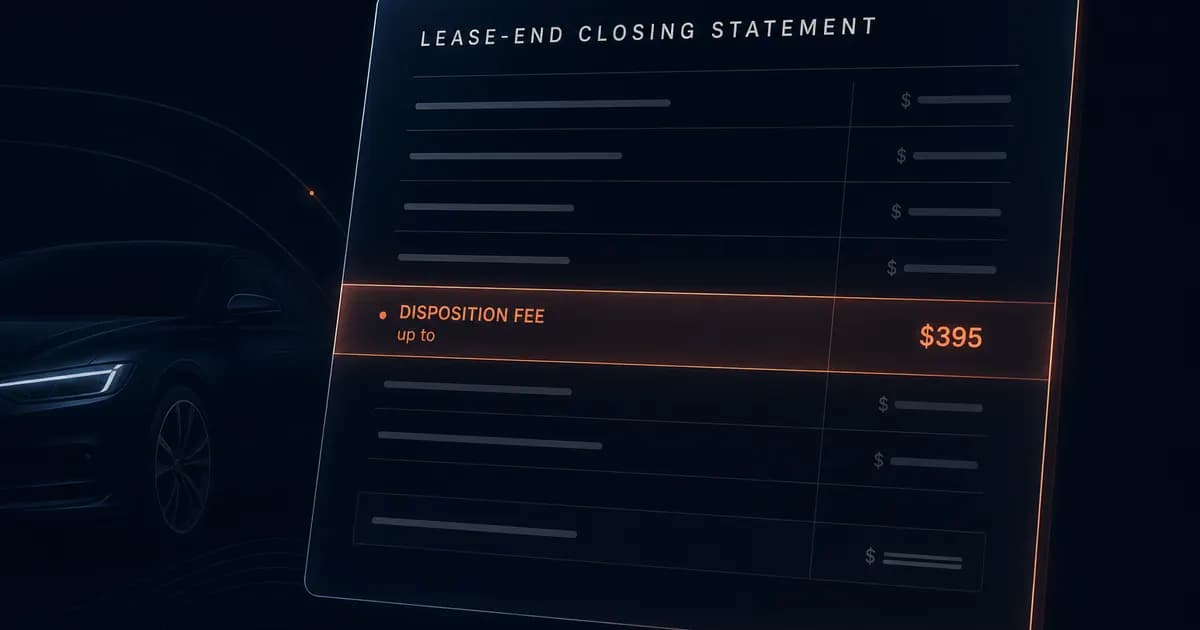
9 minDisposition fees by brand
What each captive lender publishes as its lease-end disposition fee, why the number is a ceiling rather than a certainty, and the one move that removes it.
 4 min
4 minLease wear and tear charges
Normal wear versus billable damage at lease return, common charge items, and how to avoid surprise wear fees.
 4 min
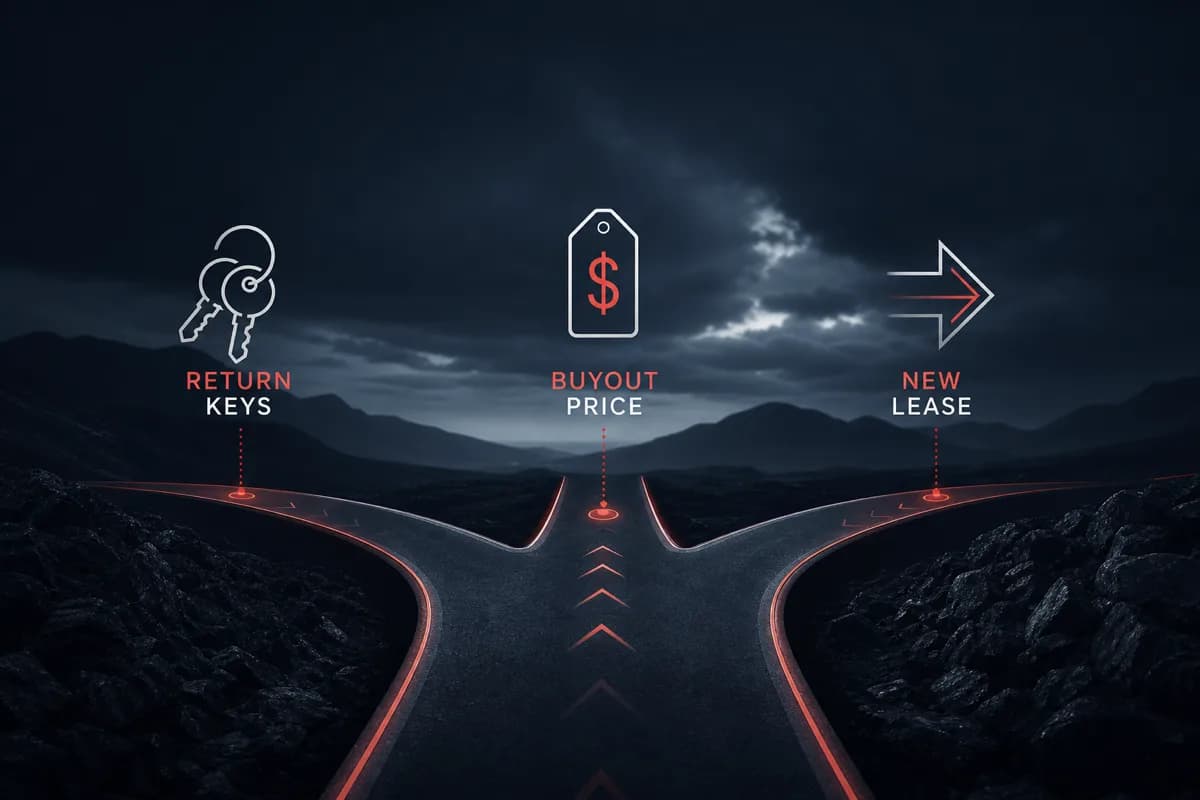
4 minEnd of lease: return, buyout, and next steps
Your options when a lease term ends, how charges are assessed, and how to plan ahead so return day is smooth.
Ready to compare?
Compare live listings by payment, drive-off, and term, then request help on a deal when you are ready.